
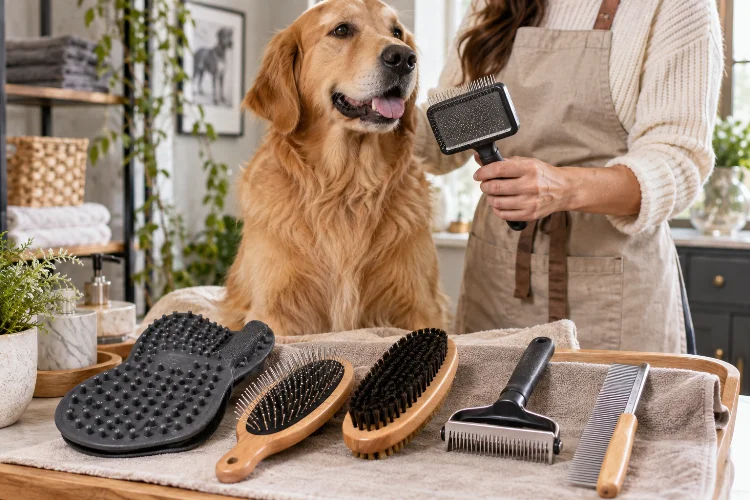
Walk into the grooming aisle of almost any pet shop and you will probably find slicker brushes, pin brushes, rubber mitts, bristle brushes, undercoat rakes, combs, and mysterious tools that look as though they belong in a toolbox.
So, which one does your dog actually need?
Choosing the best brushes for different dog coat types is easier once you understand what each tool is designed to do.
A rubber grooming mitt that works beautifully on a Boxer will barely reach through the thick coat of a Husky. Meanwhile, an aggressive undercoat tool would be unnecessary for a short, single-coated dog.
The American Kennel Club recommends choosing grooming tools according to coat type, length, density, and the amount of shedding. Different brushes are designed to remove loose hair, smooth the outer coat, reach the undercoat, or work through tangles.
The right brush makes grooming faster, more comfortable, and much more effective. Here is how to choose one.
Why Your Dog’s Coat Type Matters
Not all dog fur works the same way.
Some dogs have short, smooth coats that lie close to the body. Others have long flowing hair, dense double coats, tight curls, or coarse wiry fur.
That difference determines what your grooming tool needs to accomplish.
A short-haired dog mainly needs help removing loose surface hair and distributing natural skin oils. A double-coated breed needs a tool capable of reaching loose undercoat beneath the outer layer.
Curly coats, meanwhile, are more likely to trap dead hair and develop mats if they are not brushed thoroughly.
Using the wrong tool may mean you brush for ten minutes while barely touching the hair that actually needs removing.
Best Brush for Short and Smooth Coats
Think of breeds such as Boxers, Beagles, Pugs, and German Shorthaired Pointers.
These dogs usually do not need long metal pins reaching deep into their coats. Instead, softer tools work well at loosening dead hair close to the skin.
1. Rubber Grooming Mitt or Curry Brush
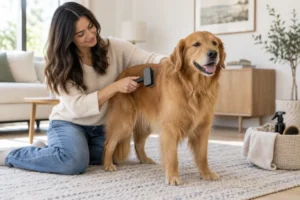
A rubber grooming mitt is one of the easiest choices for a smooth-coated dog.
The flexible rubber surface massages the skin while lifting loose fur and dirt. AKC guidance specifically recommends rubber brushes and grooming mitts for short coats because longer grooming tools are often unnecessary.
You can gently move the mitt in circular motions to loosen hair, then smooth the coat in the direction of growth.
2. Bristle Brush
A bristle brush is another good option.
Natural or synthetic bristles help remove loose hair and dander while smoothing the coat. They can also help distribute natural oils, giving short fur a cleaner, shinier appearance.
For many short-coated dogs, a rubber mitt followed by a bristle brush is more than enough.
Best Brush for Medium-Length Coats
Medium coats sit somewhere between easy-care short hair and demanding long fur.
Retrievers and similar dogs may have enough coat to trap loose hair without requiring the same intensive grooming as a very long-haired breed.
VCA recommends combs or relatively firm bristle brushes for medium-length shedding coats.
A slicker brush can also be helpful when the coat is dense or when small tangles begin to form.
Start with gentle brushing through the outer coat, then use a comb to check areas where loose hair tends to collect.
Pay particular attention behind the ears, around the legs, and underneath collars or harnesses. These friction areas can become tangled much faster than the middle of the back.
Best Brushes for Long-Haired Dogs
Long coats need more than a quick surface brush.
Breeds such as Shih Tzus, Yorkshire Terriers, Afghan Hounds, and other long-haired dogs can develop tangles close to the skin even when the top of the coat looks perfectly tidy.
1. Pin Brush
A pin brush has longer, widely spaced pins and is useful for smoothing long coats without crushing or pulling heavily on the hair.
AKC guidance describes pin brushes as especially useful as finishing tools for long-coated breeds.
2. Slicker Brush
A slicker brush uses closely spaced wire pins and is excellent for removing loose hair and dealing with small tangles.
Use light pressure. Pressing a slicker aggressively against the skin can make grooming uncomfortable.
3. Metal Comb
A metal comb is particularly valuable because it tells you whether you actually brushed through the whole coat.
After using the brush, gently run the comb from near the skin toward the ends. If it moves smoothly, the section is probably tangle-free.
Long-haired dogs often require more frequent grooming, ranging from several sessions per week to daily care depending on coat condition and lifestyle.
Best Brush for Curly and Poodle-Type Coats
Curly coats can look wonderfully fluffy, but they are especially good at trapping loose hair.
Poodles and similar non-shedding or low-shedding coat types still lose hairs. Instead of easily falling onto the floor, those hairs may remain trapped in surrounding curls, where they contribute to tangles and mats.
VCA recommends slicker brushes for curly, non-shedding coats such as Poodles.
A slicker brush combined with a metal comb is therefore a practical setup.
Brush small sections rather than quickly sweeping over the surface. Then use the comb to check your work.
Areas around the ears, legs, armpits, tail, and wherever collars or harnesses rub deserve extra attention.
With these coats, skipping several grooming sessions can turn a few tiny tangles into much more dificult mats.
Best Brush for Double-Coated Dogs
Double-coated breeds have two distinct layers: an outer coat and a softer undercoat beneath it.
Examples include Huskies, Collies, Pomeranians, Corgis, and many retriever-type dogs.
The challenge is reaching loose undercoat without unnecessarily damaging the protective outer hairs.
1. Slicker Brush
A slicker can lift loose hair from dense coats and is useful for routine grooming. AKC specifically identifies slickers as effective tools for longer and double-coated dogs.
2. Undercoat Rake
An undercoat rake has longer metal teeth designed to reach beneath the outer coat and remove loose undercoat.
AKC notes that the tooth length should match the dog’s coat depth, because a rake that is too short may not reach the undercoat effectively.
During seasonal shedding, double-coated dogs may suddenly release large quantities of fur. A coat rake or appropriate de-shedding tool can be especially useful during these periods.
Work gently and follow the direction of hair growth rather than aggressively dragging the tool across the skin.
Best Tools for Wiry Coats
Wire-haired breeds have coarse outer hairs that require slightly different grooming.
A pin brush can help maintain the coat and remove loose material, while combs can work through tangles. A slicker may then be used to finish the coat.
AKC describes a maintenance routine for wire coats involving a pin brush, medium-toothed comb, fine comb, and slicker brush.
Some traditional wiry coats are also maintained through hand stripping, where dead outer hairs are removed manually rather than clipped.
This is one situation where professional grooming advice can be particularly useful. The correct maintenance depends on whether the dog is kept as a pet, shown competitively, and how the owner wants the coat to look.
Brushing alone may not completely replace specialised coat maintenence for certain wire-haired breeds.
What About Dogs With Sensitive Skin?
Dogs with sensitive or irritated skin need extra care.
A soft rubber brush, grooming mitt, or soft bristle brush may be more comfortable than a firm metal tool, depending on the coat type.
However, sensitivity during brushing should not automatically be blamed on the brush.
If your dog suddenly flinches when one area is touched, develops redness, loses hair, scratches excessively, or appears painful, stop grooming that area and investigate the reason.
Regular brushing can actually help owners notice cuts, sore areas, parasites, lumps, and skin changes earlier.
Persistent discomfort should be discussed with a veterinarian rather than solved simply by buying a softer brush.
Slicker Brush vs. Pin Brush: What Is the Difference?
These two tools are often confused.
A slicker brush usually has many fine, closely spaced wire pins. It is designed primarily to remove loose hair, prevent tangles, and work through minor mats.
A pin brush resembles a human hairbrush, with longer and more widely spaced pins. It works well for smoothing and finishing longer coats.
Many owners of long-haired dogs use both.
The slicker performs the heavier grooming work, while the pin brush helps finish and smooth the coat.
Neither completely replaces a comb. A comb remains one of the easiest ways to check whether hidden tangles are still present near the skin.
Be Careful With Mats
A mat is more than messy hair.
Tightly tangled fur can pull against the skin and become uncomfortable. Mats commonly develop in areas where moisture, movement, or friction causes hairs to twist together.
Small tangles may sometimes be worked apart gently with fingers, a comb, or an appropriate mat-removing tool.
Never yank repeatedly through a painful mat.
Also be cautious with scissors around tightly tangled hair. Dog skin can become pulled up into the mat, making accidental cuts surprisingly easy.
If matting is extensive or close to the skin, a professional groomer is usually the safer option.
How Often Should You Brush?
Coat type determines frequency just as much as brush choice.
A short smooth coat may need only weekly brushing, while long-haired dogs may require grooming several times a week or even every day.
Double coats often require more frequent attention during heavy shedding seasons.
Curly and long coats should be checked regularly because tangles can form even when the dog does not appear to be shedding much.
Lifestyle matters too.
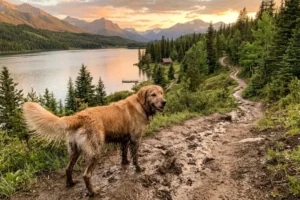
A dog walking through woodland, long grass, mud, or beaches may need more frequent grooming than one spending most of the day indoors.
Instead of relying entirely on a calendar, use your hands and comb to check the coat regularly.
How to Choose the Right Brush in the Store
Ignore fancy packaging for a moment and think about your dog’s actual fur.
For a short smooth coat, start with a rubber grooming mitt or bristle brush. For long hair, consider a pin brush, slicker, and comb. For curly coats, a slicker plus comb is a practical combination. Double coats often benefit from a slicker and undercoat rake.
Brush size also matters.
AKC notes that grooming tools should suit the dog’s body size as well as coat type. A brush designed for a Saint Bernard will be awkward around a Chihuahua’s legs and face.
Whatever you choose, check that the handle feels comfortable and that the pins or teeth do not feel unnecessarily sharp.
The best grooming tool is one that removes the right hair without making your dog dread the next brushing session.
Finding the best brushes for different dog coat types becomes much easier once you stop looking for one universal grooming tool. Short coats usually suit rubber mitts and bristle brushes, while long coats benefit from pin brushes, slickers, and combs.
Curly coats often need a slicker-and-comb combination, while double coats may require an undercoat rake during heavy shedding.
The most important rule is simple: brush gently and choose a tool that matches what your dog’s coat actually needs.
Check the coat regularly, pay attention to areas where tangles form, and ask a professional groomer if you are unsure about specialised coat care.
The right brush can turn grooming from a frustrating chore into a quick routine that keeps your dog comfortable and looking their best.