
Brushing your dog can look like one of the easiest parts of pet care. Grab a brush, run it through the coat a few times, remove the loose hair, and you are finished – right?
Not quite.
Good brushing is about more than making your dog look tidy. Regular grooming removes loose hair, dirt, dead skin, and debris while helping distribute natural oils through the coat.
It also gives you an opportunity to notice ticks, lumps, irritated skin, cuts, or other changes that might otherwise remain hidden.
Learning how to brush your dog properly is especially important for long-haired, curly, and double-coated breeds because tangles can quickly develop into uncomfortable mats. But even a short-haired dog benefits from regular coat care.
The good news is that you do not need professional grooming skills to get the basics right. You mainly need the correct brush, a gentle technique, and a routine your dog feels comfortable with.
Why Regular Brushing Matters
Dog brushing serves several purposes at once.
The most obvious benefit is removing loose hair before it ends up on your sofa, clothing, or carpet. Brushing also clears away dirt and dead skin cells while spreading natural skin oils along the hair shafts, helping maintain a healthier-looking coat.
For longer coats, regular brushing also prevents small tangles from becoming tight mats.
Grooming sessions are useful health checks too. As your hands move over the dog, you may notice a lump, sore patch, tick, cut, or area of unusual sensitivity.
That makes brushing both cosmetic maintenance and a practical part of everyday dog care.
Choose the Right Brush for Your Dog’s Coat
Using the wrong tool can make grooming ineffective or uncomfortable.
1. Short, Smooth Coats
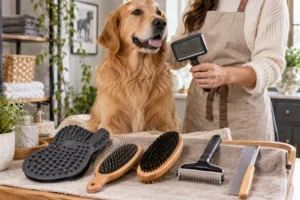
Dogs such as Boxers and many short-haired breeds usually do well with a soft bristle brush, rubber curry brush, or grooming glove. These tools remove loose hair without aggressively scratching the skin.
Short coats may look maintenance-free, but they can still shed considerably.
2. Medium and Long Coats
Dogs with longer fur often benefit from pin brushes, slicker brushes, and metal combs. A comb is particularly useful for checking whether you have actually reached through the coat rather than simply brushing the top layer.
3. Curly Coats
Curly or continuously growing coats, such as those found on Poodles, commonly need a slicker brush combined with a comb. These coats can mat surprisingly quickly if brushing is skipped.
4. Double Coats
Double-coated breeds have a softer undercoat beneath protective outer hairs. The undercoat needs attention too, particularly during seasonal shedding.
Depending on the breed, an undercoat rake, appropriate comb, or de-shedding tool may help remove loose undercoat without damaging the outer coat.
Start With a Calm and Comfortable Dog
Do not begin grooming when your dog is already overexcited, frightened, or desperate to run outside.
Choose a quiet area and let your dog see and sniff the brush first. For puppies or nervous dogs, touch the brush gently against the body and reward calm behaviour before doing much actual brushing.
The AKC recommends introducing grooming gradually and using treats to create a more positive association, especially for dogs that are uncomfortable with brushing.
Keep the first sessions short.
You do not need to groom the entire dog during the first attempt. Brushing one small area for thirty seconds, giving a treat, and stopping can be far more productive than forcing an anxious dog through twenty minutes of grooming.
The goal is cooperation, not a wrestling match.
How to Brush Your Dog Step by Step
Begin where your dog is comfortable being touched, often around the shoulders or upper back.
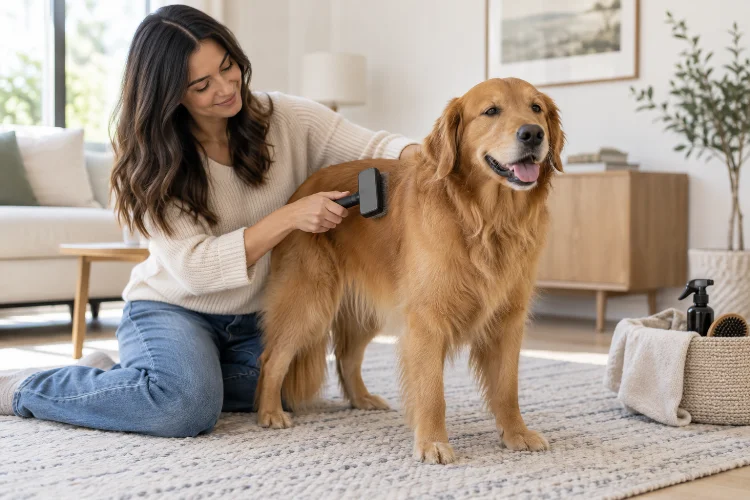
Use gentle strokes and work gradually through the body. For most coats, brushing in the direction the hair naturally grows is a comfortable starting technique.
Do not simply skim across the surface.
For medium, long, or thick coats, separate the hair into small sections and make sure the brush reaches through the coat without scraping the skin. This is sometimes called line brushing and can help reveal tangles hidden underneath the top layer.
Work from one section to another instead of randomly brushing different parts of the body.
Use light pressure, particularly with wire slicker brushes. AKC guidance warns that pressing a slicker brush too firmly can cause discomfort.
After brushing longer coats, run an appropriate comb through the area. If the comb moves smoothly from near the skin to the ends, you have probably removed most loose hair and tangles.
Pay Extra Attention to Tangle-Prone Areas
Some areas seem to manufacture tangles almost by themselves.
Check behind the ears, underneath the collar, around the armpits, along the back of the legs, beneath the belly, around the groin, and anywhere a harness regularly rubs against the coat.
VCA specifically recommends checking areas behind the ears, beneath the armpits, and along the backs of the legs because mats commonly form there.
Take your time in sensitive locations.
Use smaller strokes and keep the brush away from delicate areas such as the eyes, genitals, and inside of the ears.
Outdoor dogs may also collect grass seeds, burrs, twigs, and other debris. Check the coat after walks through long grass or wooded areas.
Catching these problems early makes grooming much easer.
How to Deal With Tangles and Mats Safely
Never attack a knot by pulling as hard as possible.
For a small tangle, hold the hair gently near the skin so your pulling does not tug directly on your dog’s body. Start near the ends of the hair and gradually work toward the base using your fingers, brush, or appropriate comb.
If your dog repeatedly flinches, cries, snaps, or tries to escape, stop.
Severe mats can pull continuously on the skin and may hide inflammation or wounds underneath. VCA recommends professional assistance for extensive matting and specifically warns owners against cutting mats with scissors because dog skin can easily be accidentally cut.
Professional groomers have clippers and experience for dealing with tightly matted coats more safely.
Also remove tangles before bathing whenever possible. Water can make existing mats tighten and become considerably more dificult to work through.
How Often Should You Brush Your Dog?
There is no universal grooming schedule because coat types vary enormously.
Long, silky, curly, or mat-prone coats may require daily brushing. Short-coated dogs usually need less frequent attention, while many dogs benefit from several brushing sessions each week.
Season also matters.
Double-coated breeds can release large amounts of undercoat during seasonal shedding periods, meaning a dog that normally needs moderate grooming may suddenly benefit from much more frequent brushing.
Lifestyle makes a difference too. A long-haired dog running through fields every afternoon may collect far more debris than a dog spending most of its time indoors.
Rather than following the calendar blindly, check the coat with your hands and comb regularly.
Should You Brush Before or After a Bath?
In most cases, brushing before bathing is extremely useful.
Removing loose hair, dirt, burrs, and tangles before the coat becomes wet makes the bathing and drying process much easier. VCA specifically recommends thoroughly brushing dogs before bathing.
After the dog is completely dry, another gentle brushing can help straighten the coat and remove additional loose hairs.
Avoid aggressively brushing wet tangled hair.
If your dog has a coat that requires specialist drying or grooming techniques, ask a professional groomer about the best routine for that particular breed.
Coat type matters more than following one rule for every dog.
Turn Brushing Into a Positive Routine
If your dog runs away whenever the brush appears, forcing longer sessions usually will not solve the problem.
Instead, make grooming predictable and rewarding.
Brush for a few seconds, reward calm behaviour, and stop before your dog becomes frustrated. Slowly extend the session over several days.
You can also offer a favourite treat after grooming so the brush begins predicting something enjoyable.
AKC guidance recommends patience, treats, and gradual desensitisation for dogs that dislike brushing.
Avoid punishing growling or other signs of discomfort. Growling provides useful information that your dog feels stressed, frightened, or painful.
If brushing one particular area suddenly becomes difficult, there may be a physical reason rather than a behavioural one.
When Should You Contact a Groomer or Veterinarian?
Home brushing can handle normal coat maintenance, but some situations require professional help.
A groomer is a sensible choice for extensive matting, complicated coat types, breed-specific trimming, hand stripping, or dogs whose coats require specialist maintenance.
A veterinarian is more appropriate if you find painful skin, wounds, unusual lumps, persistent redness, parasites, bald patches, excessive dandruff, strong odour, or sudden changes in coat quality.
VCA notes that coat and skin changes can sometimes reflect underlying health or nutritional problems rather than a lack of grooming.
Do not keep brushing aggressively over painful skin hoping the problem will disappear.
A grooming problem and a medical problem can look surprisingly similar at first.
Learning how to brush your dog properly comes down to three things: choosing the right grooming tool, working gently through the entire coat, and brushing frequently enough to prevent tangles from becoming mats.
Pay particular attention behind the ears, beneath the legs, around harness areas, and anywhere thick fur collects. Keep sessions short and rewarding if your dog is still learning to accept grooming, and never pull aggressively through painful knots.
Most importantly, use brushing time to actually look at your dog. Check the coat and skin for changes while you work.
Start with a short grooming session today and gradually turn brushing into a normal part of your dog’s routine. Done regularly, it can keep the coat healthier while making future grooming considerably more comfortable for both of you.