
Bringing a dog into a home with children can create years of memorable moments. A family dog can become a playmate in the garden, a walking companion after school, and that furry friend who somehow appears whenever someone opens a snack.
But choosing a dog for a family involves more than finding the cutest puppy. Different breeds have different energy levels, personalities, grooming needs, sizes, and training requirements.
A dog that works beautifully for an outdoorsy family with teenagers may be overwhelming for a quieter household with toddlers.
The best family dog breeds for homes with children tend to combine a sociable temperament with trainability and an ability to adapt to family routines. However, breed alone never guarantees behaviour.
Individual personality, early socialisation, training, and responsible supervision are equally important. The American Kennel Club also recommends considering your children’s ages, home environment, and lifestyle when choosing a family dog.
Here are six breeds worth considering.
What Makes a Good Family Dog?
A good family companion should ideally enjoy being around people without becoming overwhelmed by normal household activity.
Patience is useful when children are involved, but parents should never expect a dog to tolerate pulling, climbing, shouting, or unwanted hugging.
Energy level matters too. Active breeds can be fantastic for families who enjoy walking, hiking, running, swimming, and outdoor adventures. However, that same energetic dog may become bored in a household that prefers quiet weekends indoors.
Training ability, adult size, grooming requirements, shedding, veterinary needs, and time alone should also influence your decision.
Most importantly, there is no completely “child-proof” breed. The RSPCA stresses that children and dogs should be supervised together and that children should learn when a dog needs space.
1. Labrador Retriever: The Energetic Family Favourite
Labrador Retrievers have developed a strong reputation as family companions for good reason. They are generally affectionate, social, energetic, and enthusiastic about participating in whatever their humans are doing.
According to the AKC, Labradors are typically outgoing and friendly, while their patient nature can make them well suited to families. They do need considerable physical activity, so regular walks, swimming, fetch, and outdoor adventures should become part of the familiy routine.
Young Labs can also be extremely enthusiastic. A large Labrador puppy racing through the living room may accidentally knock over a toddler, even without any aggressive intention.
Early obedience training helps enormously. Teaching commands such as sit, stay, leave it, and settle makes everyday interactions between children and dogs much easier to manage.
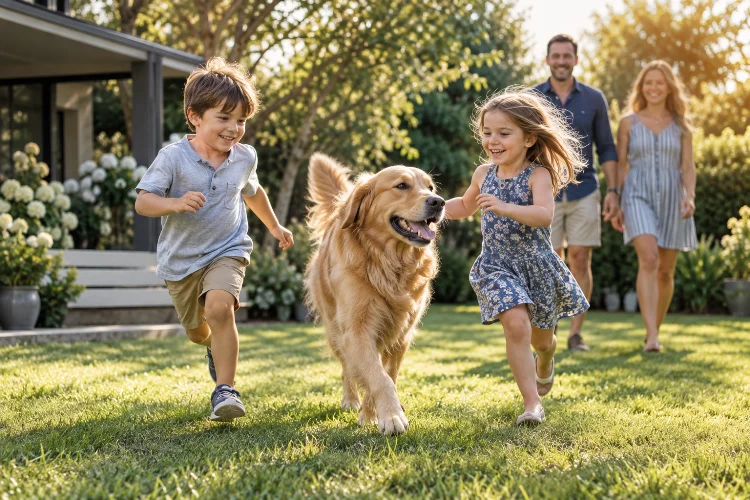
2. Golden Retriever: Gentle, Social, and Playful
Golden Retrievers are another classic choice for households with children. Their affectionate personality, intelligence, and willingness to interact with people have made them popular family companions.
The AKC describes Goldens as gentle and patient with children while also noting their need for plenty of physical activity and mental stimulation.
This makes them particularly suitable for active households. Trips to the beach, games of fetch, long walks, swimming, and family hikes can provide useful outlets for their energy.
Their beautiful coat comes with additional maintenance, though. Regular brushing is necessary, and prospective owners should be prepared for shedding around the home.
Goldens also remain playful well into adulthood. Families wanting a relaxed dog that needs minimal exersice may find their enthusiasm more demanding than expected.
3. Beagle: A Smaller Dog With Plenty of Personality
Families looking for something smaller than a Labrador or Golden Retriever may want to consider the Beagle.
Beagles are social hounds originally developed to work alongside other dogs and people. That background helps explain why many thrive on companionship.
The AKC describes them as loyal, easygoing, good with young children, and happiest in households that can provide regular physical and mental activity.
Their manageable size is another advantage. They are sturdy enough for an active family without occupying as much space as many large breeds.
There are challenges, however. A Beagle’s nose often has its own agenda. Interesting scents can quickly become more important than your instructions, making secure gardens and leash walking important.
Beagles can also be vocal. Consistent positive training from puppyhood can help establish good household manners.
4. Poodle: Intelligent and Highly Trainable
Poodles are sometimes stereotyped as fancy show dogs, but behind the elaborate hairstyles is an athletic and remarkably intelligent breed.
Standard, Miniature, and Toy Poodles provide families with several size options. For households with younger children, a Standard or Miniature may sometimes be easier to manage than the more physically delicate Toy variety.
Poodles generally respond well to positive training because they are intelligent and attentive. According to the AKC, they tend to be energetic, people-oriented, good with children, and adaptable to different environments.
The biggest requirement is stimulation. Smart dogs can invent their own entertainment when bored, and their definition of entertainment may involve shoes, furniture, or whatever interesting object was left within reach.
Training games, scent activities, puzzle feeders, walks, and interactive play can keep their minds busy.
Their curly coats also require regular groming. Although Poodles shed relatively little, professional clipping and routine coat care should be included in the family budget.
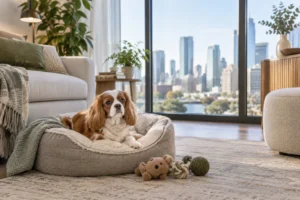
5. Cavalier King Charles Spaniel: A Gentle Smaller Companion
Not every family wants a large, high-energy dog. The Cavalier King Charles Spaniel offers a much smaller alternative with a famously affectionate personality.
Cavaliers typically combine the cuddly characteristics of a companion breed with enough enthusiasm to enjoy walks and games. The AKC describes them as gentle, adaptable, eager to please, and known for being good with children.
Their smaller size can work well in homes without enormous gardens, although they still need daily exercise and mental stimulation.
Families should remember that smaller dogs require careful handling. Young children need to learn that a dog is not a toy and should not be picked up, squeezed, chased, or disturbed while sleeping.
Prospective owners should also research breed-specific health issues carefully before choosing a breeder or rescue dog.
6. Bernese Mountain Dog: A Gentle Giant for Spacious Homes
If plenty of space is available, the Bernese Mountain Dog offers a completely different family-dog experience.
Berners are large, powerful dogs, but their temperment is often described as affectionate and gentle. The AKC notes that they have a reputation for being particularly gentle with children and are strongly devoted to their families.
Their sheer size needs serious consideration, especially around small children. An excited dog weighing more than many adults expect can accidentally knock someone down.
Bernese Mountain Dogs also require regular brushing because of their thick double coats. They thrive on companionship and generally do better when they are included in family life rather than left alone for long stretches.
Their relatively short average lifespan is another factor prospective owners should understand before bringing one home.
Matching the Dog to Your Family Lifestyle
Instead of asking only, “Which breed is best with children?” ask what kind of life your household can realistically provide.
If weekend hiking, running, swimming, and outdoor games are normal activities, an energetic Labrador, Golden Retriever, or Poodle may fit naturally. A family wanting a smaller companion might prefer a Cavalier or Beagle.
Think several years ahead as well. A cute puppy may become a 30-kilogram adult dog requiring daily exercise, veterinary care, food, training, grooming, and attention for a decade or longer.
Meeting adult dogs of the breed can provide a much more realistic idea of what ownership will actually look like.
Breed Matters, but Individual Personality Matters More
Breed characteristics can help narrow down your choices, but they are tendencies rather than guarantees.
Dogs within the same breed can have noticeably different confidence levels, energy, tolerance, sociability, and training histories.
An adult rescue dog with a known personality may sometimes be easier to match with a household than a puppy whose adult behaviour is still developing.
The RSPCA recommends considering factors such as the individual dog’s age, temperament, energy level, confidence, and previous experience rather than relying only on breed labels.
If adopting, speak openly with rescue staff about your children’s ages and daily routine. Responsible organisations can help identify dogs that are comfortable around children.
Teach Children How to Behave Around Dogs
Finding the right dog is only half of the equation. Children also need to learn how to interact with animals respectfully.
They should understand that dogs need uninterrupted time while eating, sleeping, resting, or enjoying special toys. Pulling ears, riding on dogs, chasing them, taking food away, or putting a face directly into a dog’s face should be discouraged.
The RSPCA recommends active adult supervision when children and dogs are together and providing the dog with a quiet place where it can retreat without being disturbed.
These simple boundaries protect both the dog and the child while helping them develop a healthier relationship.
The best family dog breeds for homes with children include everything from energetic Labradors and Golden Retrievers to clever Poodles, sociable Beagles, gentle Cavaliers, and impressive Bernese Mountain Dogs.
The right choice depends less on popularity and more on compatibility. Consider your children’s ages, available space, daily schedule, activity level, grooming budget, training experience, and how much time the dog may spend alone.
Remember that even the most freindly breed requires responsible training and supervision around children. Research carefully, meet potential dogs whenever possible, and involve the whole family in preparing for pet ownership.
Choose a companion whose needs genuinely match your household, and you will have a much stronger foundation for years of safe, happy family life.