
Living in a flat does not mean you have to give up the dream of having a dog. In fact, plenty of smaller breeds can thrive in compact homes, provided their physical exercise, mental stimulation, training, and social needs are properly met.
The trick is understanding that size alone does not determine whether a dog will enjoy apartment life. A tiny terrier with endless energy and a habit of barking at every hallway sound may be harder to manage than a slightly larger but calm companion breed.
The American Kennel Club similarly notes that activity level and barking behaviour are important considerations for apartment dwellers, not just physical size.
So, what are the best small dog breeds for flats and apartments? Below are several popular options, along with practical insights into temperament, exercise, grooming, and everyday life in a smaller home.
What Makes a Small Dog Good for Apartment Living?
A good apartment dog should generally be adaptable, manageable indoors, and comfortable without access to a private garden. Moderate exercise requirements are helpful, but that does not mean apartment dogs can skip daily walks.
Noise matters too. In a building with shared walls, an extremely vocal dog can quickly become a problem for both you and your neigbours. Training and early socialisation are therefore just as important as choosing the right breed.
You should also consider how often you are home. Some companion breeds become deeply attached to their humans and may struggle when left alone for long periods.
1. Bichon Frise: Cheerful and Adaptable
The Bichon Frise is a small, affectionate companion dog with a playful personality. Its manageable size and adaptable nature make it particularly attractive for people living in apartments.
Bichons also shed relatively little, although that does not mean they are maintenance-free. Their continuously growing coat requires regular brushing and professional groming to prevent tangles and matting.
They enjoy walks and games but usually do not require acres of outdoor space. Indoor play, short training sessions, puzzle toys, and regular walks can provide a good balance.
For owners who want an outgoing little companion rather than an independent dog, the Bichon can be an excellent match.
2. Cavalier King Charles Spaniel: Calm and Affectionate
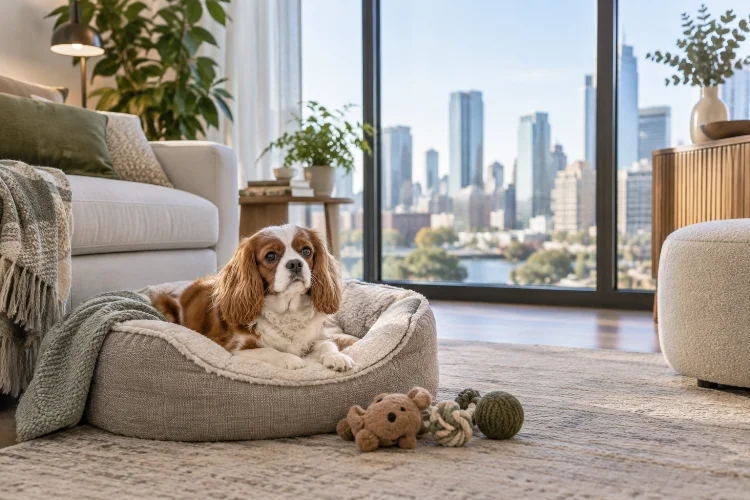
The Cavalier King Charles Spaniel combines a conveniently small body with a gentle, people-focused personality. They tend to enjoy being close to their owners and can adjust well to relatively quiet indoor lifestyles.
One advantage is their flexibility. A Cavalier may happily curl up beside you on the sofa but will usually still enjoy walks, play sessions, and trips outdoors.
The breed has frequently been recommended for apartment living because of its relatively manageable size and temperament.
However, prospective owners should research breed-related health conditions carefully and choose responsible breeders or reputable rescue organisations.
3. Toy Poodle: Smart, Small, and Highly Trainable
Do not let the elegant haircut fool you. Toy Poodles are extremely intelligent dogs that need mental activity alongside physical exercise.
Their compact size makes them practical for smaller homes, while their trainability makes teaching apartment manners easier.
Games involving food puzzles, scent work, obedience exercises, and tricks can keep their brains occupied without requiring a huge garden.
Poodles also shed relatively little compared with many breeds, although their curly coats need consistent maintenance and clipping.
They are especially suitable for owners who actually enjoy interacting and training with their dog rather than simply looking for a passive lap dog.
4. Shih Tzu: A Classic Indoor Companion
Few breeds fit the description “companion dog” better than the Shih Tzu. These small dogs were developed primarily for companionship and tend to enjoy staying close to their people.
Their modest exercise needs and adaptable personalities can make them particularly comfortable in an aprtment. The AKC describes Shih Tzus as affectionate and adaptable dogs that can do well in apartment environments.
There is one major commitment: coat care. Long-coated Shih Tzus may need daily brushing, regular bathing, and routine trimming.
Shih Tzus are also flat-faced dogs. Owners should understand that brachycephalic breeds can experience breathing difficulties, heat intolerance, and other health concerns associated with their facial structure.
5. Maltese: Tiny Dog With a Big Personality
The Maltese has been a companion dog for generations, and its tiny size makes it naturally convenient for people without much floor space.
These dogs can be lively and playful, but their exercise needs can usually be met through walks combined with games around the home. Their small bodies also make them easier to handle in lifts, shared corridors, public transport, and crowded urban environments.
Maltese dogs do require coat maintenance, particularly when their hair is kept long. Many pet owners choose a shorter trim to make everyday care simpler.
Despite their delicate appearance, they still require training. Without boundaries, a clever little companion can develop undesirable habits just as easily as a larger dog.
6. Havanese: Social and Apartment-Friendly
The Havanese is another small companion breed worth considering. Friendly and people-oriented, these dogs generally enjoy being involved in everyday household life.
Their size makes them practical for apartments, but they still appreciate daily walks and interactive play. Toy breeds and other compact companion dogs are often suitable for city living precisely because their physical size allows them to adapt to smaller spaces.
Havanese dogs can become strongly attached to their families, so people who spend extremely long hours away from home should think carefully about their routine.
Regular brushing is also necessary, especially for dogs with longer coats.
7. Italian Greyhound: Quiet and Surprisingly Relaxed Indoors
The Italian Greyhound might look like a miniature athlete, but many are surprisingly enthusiastic about blankets, sofas, and warm laps.
They still need opportunities to walk, explore, and occasionally run safely. Indoors, however, their slim size and generally relaxed behaviour can work well in smaller homes.
Their short coat is easy to maintain, although Italian Greyhounds tend to dislike cold weather and may need additional protection in chilly climates.
Because they have relatively delicate bodies, families with very young or extremely energetic children should consider whether their household environment is suitable.
8. Chihuahua: Maximum Personality in Minimum Space
Few dogs require less physical room than the Chihuahua. They are among the smallest recognised breeds, yet their personalities can be remarkably confident.
Chihuahuas can exercise through a mixture of short outdoor walks and indoor activity, making them convenient for urban homes.
Small and toy breeds are commonly associated with apartment living, although their individual personalities and activity requirements still vary considerably.
The biggest potential challenge is barking. A Chihuahua that reacts to doors, voices, lifts, footsteps, or other dogs can become difficult in a shared building.
Early socialisation and calm, consistent training therefore matter considerably.
Size Is Not the Only Thing That Matters
Choosing the smallest possible dog is not automatically the smartest strategy.
A dog’s energy level, tendency to bark, temperament, trainability, health, grooming requirements, and ability to spend time alone may influence apartment compatibility far more than an extra few kilograms of body weight.
Some energetic small terriers, for example, may need considerably more stimulation than people expect. Without enough physical and mental excersise, boredom can appear as barking, chewing, pacing, or other unwanted behaviour.
Think about your actual lifestyle rather than selecting a breed purely because it looks cute.
Creating a Dog-Friendly Flat
Even a very small dog benefits from having clearly defined areas for sleeping, eating, playing, and relaxing. A comfortable bed positioned away from constant hallway noise can help create a calmer resting environment.
Daily walks remain important. They provide more than exercise; they allow dogs to sniff, explore, socialise, and experience different environments.
Mental stimulation is equally useful. Food puzzles, scent games, short training sessions, chew toys, and rotating toys can keep life interesting without filling your flat with equipment.
If your building has stairs or lifts, introduce your dog gradually and positively. Good manners in hallways and communal areas also make apartment life easier for everyone.
Think About Health Before Choosing a Breed
Appearance should never be the only consideration when selecting a dog.
Some popular compact breeds have inherited health risks. Flat-faced dogs such as French Bulldogs, Pugs, Bulldogs, and Shih Tzus can be affected by Brachycephalic Obstructive Airway Syndrome (BOAS), which can interfere with breathing, exercise, sleep, and temperature regulation.
This is especially relevant in warm climates, because dogs primarily cool themselves through panting and severely flat-faced dogs may struggle to regulate their temperature effectively.
Research health testing, expected veterinary costs, lifespan, grooming requirements, and common breed conditions before adopting or purchasing any dog.
The best small dog breeds for flats and apartments are not simply the tiniest dogs available.
The right choice depends on your schedule, activity level, tolerance for barking, grooming budget, experience with training, and the amount of companionship you can provide.
Bichon Frises, Cavaliers, Toy Poodles, Shih Tzus, Maltese, Havanese, Italian Greyhounds, and Chihuahuas can all suit smaller homes under the right circumstances. Every individual dog, however, has its own personality.
Before bringing one home, meet the dog when possible, research the breed carefully, consider adoption, and speak with a veterinarian or reputable breed professional.
Choose based on compatibility rather than appearance, and your small flat can become a very comfortable home for both of you.