
A dog racing back to you the moment you call looks effortless. In reality, reliable recall is one of the most valuable – and sometimes most challenging – skills you can teach.
Think about what you are asking your dog to do. They may be sniffing an amazing scent, watching another dog, chasing leaves, or exploring somewhere new. When you call, you are asking them to stop all of that and decide that returning to you is more rewarding.
Learning how to teach a dog to come when called therefore requires more than repeating “come” louder and louder. The goal is to build a strong association between your recall cue and something positive.
Training should begin somewhere easy, then gradually introduce greater distance and distractions. The AKC and Blue Cross both recommend starting recall work in quiet, controlled environments before progressing outdoors.
Done patiently, recall can become an everyday skill that also provides an important layer of safety.
Understand What a Recall Cue Means
A recall cue tells your dog to stop what they are doing, turn toward you, and come all the way back.
Choose one simple word. “Come,” “here,” or another short cue can work. Some owners prefer a whistle. What matters most is using it consistantly.
Everyone in the household should ideally use the same cue. Blue Cross recommends consistency so the dog does not have to interpret several different words for the same behaviour.
Your dog’s name can first get their attention, followed by the recall cue: “Max, come!”
Avoid constantly repeating it. If you say “come, come, COME!” while your dog continues exploring, they may learn that responding to the first cue is optional.
Start Training Somewhere Quiet
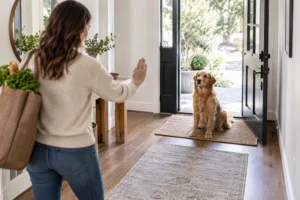
Your living room is more useful for early recall training than a busy dog park.
Begin only a few feet away. Wait until your dog is mildly interested in something else, then say their name followed by your recall cue in a cheerful tone.
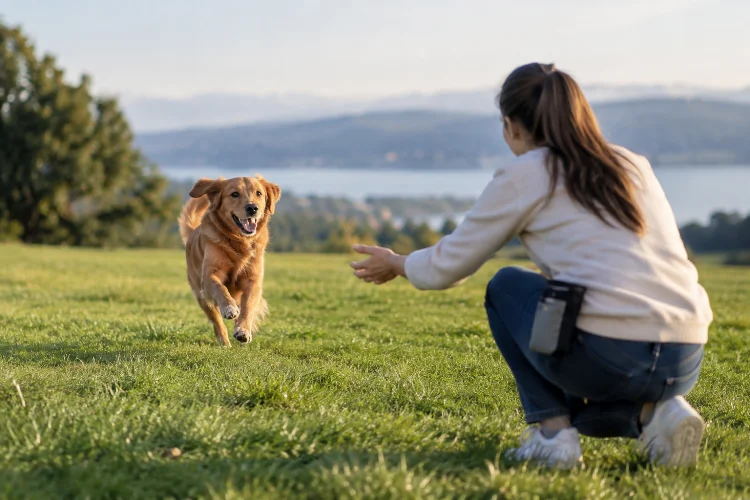
As they move toward you, encourage them enthusiastically. You might step backwards, open your arms, or make yourself more interesting.
When they reach you, reward them immediately.
The AKC recommends initially practising in low-distraction environments and using something the dog genuinely values, such as a favourite treat or toy.
Repeat a few times, then finish the session while your dog is still interested.
Five enjoyable repetitions are often more productive than twenty repetitions after your dog becomes bored.
Make Coming Back Extremely Rewarding
Recall creates competition.
At home, you may only be competing with a sofa. Outside, you are competing with squirrels, dogs, smells, people, food, water, and hundreds of other interesting things.
Your reward needs to matter.
Regular kibble may work inside the house. Outdoors, you may need something much more valuable, such as small pieces of chicken or another dog-safe treat your pet loves. Toys and games can also work for dogs that prefer play.
Blue Cross recommends choosing rewards that make returning genuinely exciting and varying rewards as training develops.
Try occasionally giving several small treats one after another rather than a single piece. This “jackpot” can make an especially good recall memorable.
The lesson you want your dog to learn is simple: hearing that cue and running back to you is almost always worth it.
Gradually Increase the Distance
Once your dog is happily returning from a few feet away, begin adding distance.
Move to the other side of the room. Then practise between rooms. Later, use a secure garden.
The RSPCA recommends gradually increasing the distance once dogs respond reliably at close range.
You can also turn recall into a game.
Have two family members stand apart and take turns calling the dog. Reward the dog each time they reach the correct person. Another option is hide-and-seek: hide somewhere easy inside the house, call once, and celebrate when your dog finds you.
These games build enthusiasm while helping dogs understand that the cue applies even when you are not directly in front of them.
If performance becomes less succesful as distance increases, shorten the distance again. Training should progress from easy wins rather than repeated failures.
Use a Long Line Before Going Off Lead
A dog coming perfectly across your kitchen is not automatically ready to run freely through a park.
Outdoor environments introduce a huge jump in difficulty.
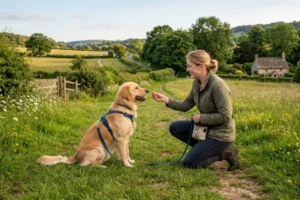
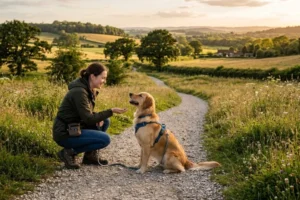
Once indoor and garden recall is reliable, practise outside using a normal leash first. Later, a long training line can provide greater freedom while maintaining physical safety.
Blue Cross recommends a long lead or training line during outdoor recall practice and advises attaching longer lines to a harness rather than the neck because sudden stops could otherwise cause injury.
The AKC similarly recommends long-line practice when moving into larger and more distracting environments.
Do not rush into off-leash training simply because several recalls went well.
Use secure areas and follow local leash rules. Recall training reduces risk, but no dog is a robot and no recall can be guaranteed in every possible circumstance.
Add Distractions One Level at a Time
Distractions are where recall training becomes interesting.
A dog that instantly returns inside may appear completely deaf when another dog runs past outside. This does not necessarily mean the dog has forgotten everything.
The environment became harder.
Start with mild distracions. Call while your dog is sniffing something in the garden. Later, practise in a quiet outdoor area. Gradually work toward environments containing people, dogs, wildlife, and interesting smells.
Do not increase every challenge simultaneously.
If you introduce a stronger distraction, reduce the distance. If you increase the distance, practise somewhere relatively quiet.
This allows your dog to keep succeeding while slowly developing stronger recall skills.
PDSA also recommends beginning somewhere quiet and gradually moving training into busier environments as the dog improves.
Teach Your Dog to Let You Hold Their Collar
A dog that runs back but immediately darts away again is only halfway trained.
When your dog reaches you, gently touch or hold their collar before giving the reward occasionally. This teaches them that approaching your hands does not mean something unpleasant is about to happen.
Both Blue Cross and the RSPCA incorporate gentle collar handling into recall exercises because owners often need to attach a leash or safely restrain a dog after calling them back.
Practise this gradually.
Call your dog, gently touch the collar, reward, and then release them back to something enjoyable.
That last step can be surprisingly valuable. Your dog learns that coming to you does not always mean freedom is over.
Never Punish Your Dog for Coming Back
Imagine calling your dog for five minutes while they ignore you.
Eventually, they return. You are frustrated, so you scold them.
From a human perspective, you are punishing the previous five minutes of ignoring you. From the dog’s perspective, something unpleasant happened when they finally approached you.
That can damage recall.
The RSPCA specifically advises owners not to punish dogs when they eventually return because it can make them less willing to approach next time.
Even if your dog took much longer than you wanted, reward the return. Then make the next training exercise easier.
Current guidance from the American Veterinary Society of Animal Behavior recommends reward-based training and advises against aversive training methods for dog training and behaviour modification.
Do Not Use “Come” Only When Fun Ends
Picture this routine.
Your dog spends twenty minutes happily exploring. You call “come,” clip on the leash, and immediately take them home.
Do that every day and your dog may discover an unfortunate pattern: “come” means fun is finished.
Blue Cross and the RSPCA both recommend avoiding calling dogs only when they are about to be put back on the leash.
During walks in appropriate controlled conditions, practise recall several times for no particular reason.
Call your dog, reward them, perhaps touch the collar, then say something like “go play” and allow them to return to exploring.
Now recall no longer predicts disappointment.
Sometimes coming back means chicken – and then more sniffing. That is a far better deal from your dog’s perspective.
What If Your Dog Completely Ignores You?
First, avoid shouting the cue repeatedly.
If your dog regularly ignores “come,” you may have progressed too quickly or weakened the meaning of the word through repetition.
Move closer and return to an easier environment.
If the existing cue has been ignored hundreds of times, the AKC suggests that it can sometimes be useful to choose a fresh recall word and rebuild the behaviour from the beginning.
Also examine the reward.
Calling a dog away from another dog in exchange for one boring piece of kibble may simply be an unfair level of difficulty during early training.
Increase reward value and reduce environmental distractions.
Most importantly, remeber that unreliable recall usually means more training is needed – not that the dog is deliberately trying to annoy you.
Practise Recall Throughout Everyday Life
Formal training sessions are helpful, but recall should also become part of normal life.
Call your dog from another room before dinner. Practise in the garden. Ask them to come away from a mild distraction, reward them, and release them again.
Short games can happen several times throughout the day.
You can also reward spontaneous check-ins. When your dog chooses to approach you during a walk, occasionally praise or reward them even though you never called.
This helps reinforce the general idea that staying connected with you is valuable.
Recall training is never completely “finished.” Continue rewarding and refreshing the skill throughout your dog’s life, especially when moving into unfamiliar environments.
Learning how to teach a dog to come when called starts with one simple idea: make returning to you rewarding. Begin indoors, use a clear recall cue, reward generously, and increase distance slowly before introducing challenging distractions.
As your dog’s skills improve, practise in secure outdoor spaces using a leash or long line before considering greater freedom.
Avoid repeating the cue endlessly, never punish your dog when they eventually return, and do not make every recall signal the end of something enjoyable.
Reliable recall develops through hundreds of positive experiences rather than one perfect training session. Start with a few easy calls at home today, celebrate every good response, and gradually make the exercise harder as your dog’s confidence grows.