


Buying a dog bed should be simple, but the endless choice of mattresses, donut beds, cushions, bolsters, and memory foam models can make it surprisingly confusing.
One bed promises orthopedic support, another claims to reduce anxiety, and a third looks comfortable but barely survives its first wash. The best dog beds for every size and budget are not necessarily the most expensive options.
A good bed should fit your dog’s body, match their sleeping style, provide enough support, and be easy to clean. A tiny Chihuahua that curls into a ball needs something very different from a Great Dane that stretches across the floor.
Age, mobility, room temperature, chewing habits, and coat type also matter. Senior dogs may benefit from thick foam and easy access, while hot sleepers often prefer breathable or raised designs.
This guide explains which dog bed styles work best for small, medium, large, and older dogs – and how to find a comfortable option without spending more than necessary.
What Makes a Good Dog Bed?
The first thing to consider is size. Your dog should be able to lie down in their favourite position without their head, back, or legs hanging awkwardly over the edges.
One practical method is to measure your dog from their nose to their back paws while they are resting, then add approximately 25 centimetres. This creates enough room for stretching without making the sleeping area unnecessarily huge.
Support is equally important. Thin filling may feel soft at first but can quickly flatten under a heavy dog. Large breeds, senior pets, and dogs with joint problems generally need denser cushioning that keeps their body away from the hard floor.
Look for a removable, machine-washable cover, a non-slip base, and durable stitching. Washable materials make it much easier to remove hair, dirt, saliva, and the occasional accident.
1. Best Budget Dog Beds
A budget bed does not have to be uncomfortable. Basic crate mats, padded cushions, and simple oval beds can work well for puppies, small dogs, and healthy adults that do not require specialist joint support.
Affordable models commonly use polyester fibre rather than memory foam. They are usually lightweight, easy to move, and suitable as secondary beds in kitchens, offices, crates, or cars.
Current UK listings show that simple cushions and crate mats can start at approximately £10-£25, although prices vary by size and retailer. Larger or more deeply padded budget models may cost slightly more.
Check whether the whole bed can be washed or only the cover. A very cheap model may become poor value if the filling clumps after one cleaning or the fabric cannot handle muddy paws.
Budget beds are best for dogs that sleep lightly, change positions frequently, or already have access to carpeted flooring. They may not provide enough support for older, heavier, or mobility-impaired pets.
2. Best Beds for Small Dogs
Small dogs often enjoy enclosed sleeping spaces that help them feel warm and secure. Donut beds, cave beds, and oval designs with raised sides are especially popular with dogs that curl into a tight ball.
Bolstered edges provide somewhere to rest the chin and can create a cosy boundary around the body. This style may suit Chihuahuas, Dachshunds, Pomeranians, Yorkshire Terriers, and other compact breeds.
Donut beds are widely marketed for small and medium-sized pets because their circular shape and cushioning accommodate natural nesting behaviour. However, not every nervous dog will automatically become calmer simply because a product is labelled an “anti-anxiety bed.”
Choose a model with enough internal sleeping space. Thick bolsters can make the usable area much smaller than the product’s outside measurements suggest.
For puppies, avoid beds with loose fibres, decorative buttons, or easily removable parts. Young dogs that chew bedding should always be supervised until you know how they interact with it.
3. Best Beds for Medium-Sized Dogs
Medium-sized dogs have the widest range of choices. Depending on their sleeping position, they may enjoy a rectangular mattress, padded oval bed, sofa-style lounger, or supportive donut design.
Dogs that curl up often prefer bolsters, while those that sleep on their sides usually need a flat surface with more stretching room. A Beagle may love an enclosed oval bed, while a Border Collie may prefer a breathable mattress after an active day.
Mid-range beds commonly cost around £30–£80 in the UK, depending on the material and size. This bracket includes many washable bolstered beds, water-resistant mattresses, self-warming models, and entry-level memory foam options.
At this price, prioritise practical construction over decorative fabric. A hidden zip, removable cover, non-slip bottom, and water-resistant inner liner may provide more long-term value than a fashionable pattern.
4. Best Beds for Large and Giant Dogs
Large dogs place more pressure on their bedding, so thickness and density matter. A soft-looking cushion may compress completely when a heavy Labrador, Rottweiler, Mastiff, or Great Dane lies down.
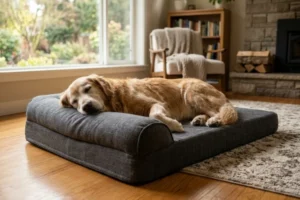
A thick rectangular orthopedic mattress is usually the most practical choice. It gives the dog space to stretch while distributing their weight across a broad, supportive surface.
Look for substantial foam, strong seams, and a washable cover. A waterproof liner beneath the outer fabric can protect the foam from moisture and extend the useful life of the bed. Non-slip material is also helpful because the bed should not slide when a large dog steps onto it.
Measure the actual sleeping area rather than relying only on labels such as “large” or “extra-large.” One brand’s large bed may be considerably smaller than another’s.
For example, some extra-large memory foam beds measure more than 120 centimetres across and include supportive sides for shared naps or giant breeds.
5. Best Orthopedic Beds for Senior Dogs
Older dogs may experience stiffness, reduced mobility, arthritis, or difficulty rising from the floor. A supportive orthopedic bed can reduce pressure on sore areas and give the dog a more comfortable resting surface.
Memory foam and contoured foam are common materials in senior dog beds. The foam should feel supportive rather than allowing the dog’s hips and shoulders to sink directly onto the floor.
Easy access is essential. A low entrance or completely flat mattress is usually better than a deep bed with high sides that the dog must climb over.
Some orthopedic models combine contoured foam, washable covers, non-slip bases, and dropped entrances for dogs with tired legs. These features can be more important than luxurious-looking fabric.
Premium orthopedic mattresses for large breeds may cost £80–£150 or more. The investment can make sense when the foam remains supportive, the cover is replaceable, and the bed is used daily.
A dog bed cannot treat arthritis by itself. Limping, difficulty standing, reluctance to exercise, or persistent pain should be discussed with a veterinarian.
6. Best Beds for Hot Sleepers and Outdoor Dogs
Not every dog wants a thick, fluffy bed. Long-haired breeds and dogs that overheat easily may repeatedly leave plush bedding to sleep on tiles or other cool surfaces.
Breathable mattresses, cooling fabrics, and elevated beds can improve airflow around the body. Reversible beds are also useful because they may offer a warm fleece side for winter and a cooler surface for summer.
Some cooling-style beds use mesh or ventilated layers to help air move through the cushion. These options can be useful for warm rooms, although they should never replace shade, water, and safe temperature management.
For gardens, camping, or travel, choose water-resistant fabric that can be wiped clean. Raised outdoor beds keep the dog away from damp ground, but they must have stable frames and fabric strong enough to support the pet’s weight.
How Much Should You Spend on a Dog Bed?
There is no perfect amount for every household. As a rough guide, basic beds may cost £10-£30, mid-range options often fall between £30 and £80, and premium orthopedic or extra-large models can exceed £80.
Spend according to the features your dog genuinely needs. A healthy young terrier may be perfectly comfortable on a washable £25 cushion, while a senior German Shepherd may benefit significantly from a more supportive orthopedic mattress.
Think about cost per year rather than the initial price alone. A £70 bed with a replaceable cover may be better value than repeatedly buying £20 cushions that become flat or damaged within months.
It can also be useful to provide more than one sleeping place. You might use a supportive main bed for overnight rest and a simpler washable mat in the kitchen or car.
Cleaning, Safety, and Durability
Dog beds collect fur, skin oils, dirt, saliva, and allergens. Vacuum loose hair regularly and wash the cover according to the manufacturer’s instructions.
Check seams, zips, foam, and non-slip backing for damage. Replace the bed when filling is exposed, the base has collapsed, or your dog can pull out pieces that might be swallowed.
A waterproof inner liner is especially useful for puppies, senior dogs, and pets that frequently return home wet. Adding a washable blanket can also protect the main cover and reduce the need to clean the entire bed as often.
Chew-resistant does not mean indestructible. Dogs that tear and swallow bedding may need a tougher mat, closer supervision, additional enrichment, and advice from a veterinarian or behaviour professional.
The best dog beds for every size and budget are the ones that match the dog rather than the décor. Small dogs often enjoy cosy bolsters, medium breeds have plenty of versatile options, and large dogs need spacious beds with filling that will not collapse under their weight.
Senior pets may benefit from low-entry orthopedic foam, while hot sleepers may prefer breathable mattresses or raised designs. Whatever your budget, prioritise correct sizing, washable materials, safe construction, and lasting support.
Measure your dog while they are sleeping, note whether they curl up or stretch out, and decide which features are genuinely necessary. Use those details to compare beds and choose a comfortable sleeping space your companion will actually use.


Leave a Comment