

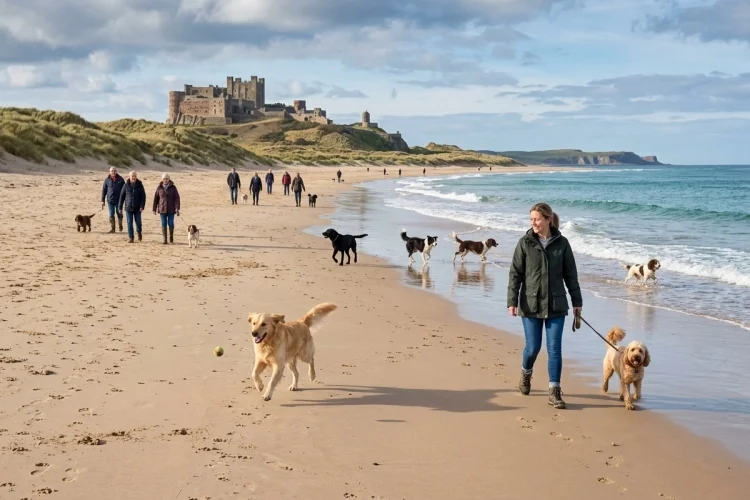
Few things make a dog happier than a wide stretch of sand, fresh sea air, and enough space to run until their legs get tired. For owners, a coastal walk can be just as refreshing – provided the beach actually welcomes four-legged visitors.
England has hundreds of beautiful beaches, but their dog policies vary considerably. Some allow dogs throughout the year, while others introduce exclusion zones during spring and summer.
Nature reserves may also require leads to protect nesting birds, seals, livestock, or fragile dunes. The best dog-friendly beaches in England combine generous walking space with memorable scenery and practical facilities.
From Cornwall’s sheltered bays to Northumberland’s castle-backed coastline, there are options for energetic swimmers, relaxed senior dogs, and everyone in between.
This guide highlights seven excellent choices. Rules were checked against official tourism, council, and National Trust sources, but local restrictions can change. Always read the signs when you arrive and check the official website before travelling.
1. Harlyn Bay, Cornwall
Harlyn Bay is a spacious mix of golden sand and pebbles near Padstow. Backed by dunes and surrounded by interesting rock pools, it offers plenty to explore without feeling as crowded as some of Cornwall’s more famous resort beaches.
Dogs are welcomed throughout the year, making Harlyn Bay a convenient choice for summer holidays as well as quieter winter walks. Its relatively sheltered position can also make it more comfortable than an exposed stretch of Atlantic coastline on windy days.
The rock pools are fun for curious dogs, but owners should watch for sharp shells and slippery surfaces. Check the tide before visiting because the amount of open sand changes considerably between low and high water.
2. Saunton Sands, Devon
Saunton Sands near Braunton is an excellent destination for dogs that need room to move. Its long sandy shoreline and nearby dunes create an open setting for walking, paddling, and playing away from cramped promenades.
Visit Devon lists Saunton among the county’s year-round dog-friendly beaches and says it has no seasonal dog restrictions. The neighbouring Braunton Burrows dune system adds more varied scenery, although dogs should remain controlled around wildlife and sensitive habitats.
The sheer size of the beach is a major advantage during busy periods. Even so, energetic dogs should not be allowed to disturb other visitors, horses, wildlife, or dogs that prefer more personal space.
3. Mudeford Spit, Dorset
Mudeford Spit, sometimes called Mudeford Sandbank, combines sandy shoreline, harbour views, colourful beach huts, and access to walks around Hengistbury Head. It feels more peaceful and natural than the busier central beaches around Bournemouth.
Dogs are allowed on Mudeford Spit throughout the year and may be off lead on the beach. However, anyone reaching it through the Hengistbury Head Nature Reserve should keep their dog under close control – preferably on a lead – to protect wildlife.
This makes the area suitable for owners who want more than a quick run on the sand. You can combine the beach with a longer coastal walk, but bring water because facilities may not be close to every part of the route.
4. Holkham Beach, Norfolk
Holkham is known for its huge skies, extensive sands, dunes, and pine woodland. At low tide, the sea retreats a long way, leaving a remarkably wide area for walking and exploring.
Dogs are welcome throughout the year. However, an on-lead policy applies in certain areas between 1 April and 30 August to protect ground-nesting birds. Owners should follow signs carefully because the restrictions do not necessarily cover the entire beach.
Holkham is especially appealing for dogs that enjoy long, steady walks rather than crowded seaside entertainment. Remember that the distances can be deceptive on such an open beach, so save enough energy and drinking water for the return journey.
5. Druridge Bay, Northumberland
Druridge Bay provides approximately seven miles of coastline, giving active dogs and owners plenty of space for an extended seaside walk. The beach is backed by dunes, while the nearby country park includes woodland paths and a lake.
Dogs are permitted on the beach throughout the year. The size of the bay makes it a strong option for high-energy pets, although it is also associated with wildlife and birdwatching, so reliable control remains essential.
Northumberland’s weather can be cool and windy even outside winter. Pack a towel, fresh water, and an extra layer for yourself, and avoid allowing your dog to drink seawater during energetic play.
6. Bamburgh Beach, Northumberland
Bamburgh Beach offers one of England’s most dramatic coastal views. Its broad shoreline is overlooked by Bamburgh Castle, while sand dunes create a natural backdrop away from the village.
Dogs are allowed on the beach, and visitors can follow the sand towards Seahouses on a route of roughly three miles each way. This provides the option of a short beach visit or a longer coastal adventure for a fit dog.
The beach is exposed, so conditions can change quickly. Keep your dog away from steep dunes and rough water, and use a long training lead when recall is unreliable around birds, other pets, or exciting coastal smells.
7. Crantock Beach, Cornwall
Crantock Beach near Newquay combines soft sand, dunes, coastal footpaths, and an estuary setting. It is a good alternative for travellers who want classic Cornish scenery without limiting their dog to a small designated zone.
The National Trust states that dogs are welcome all year, with no current beach restrictions. Pets should still remain under close control, especially around other visitors, grazing livestock, cliff edges, and nearby walking routes.
Estuaries can create strong currents and rapidly changing channels. A dog that confidently swims in a calm lake may still struggle in coastal water, so do not assume that shallow-looking sections are safe.
How to Choose the Right Beach for Your Dog
The most beautiful beach is not automatically the best one for your pet. Consider their age, confidence, recall, physical health, and reaction to crowds before choosing a destination.
A nervous dog may enjoy a quiet early-morning walk more than a busy afternoon among children, surfers, and other animals. Senior dogs may need easy access and firm sand, while energetic pets may benefit from a wide beach such as Saunton or Druridge Bay.
Check tide times, weather warnings, parking arrangements, and dog restrictions before leaving home. Seasonal rules may apply only to specific zones, so a beach described as “restricted” can sometimes still have a large dog-friendly section.
Bring fresh water, a bowl, waste bags, a towel, treats, and a secure lead. Rinse salt and sand from your dog’s coat and paws after swimming, and never leave a pet unattended in a parked car.
Follow Responsible Beach Etiquette
Dog-friendly access depends on owners behaving responsibly. Pick up waste immediately, prevent your pet from approaching picnics or nervous dogs, and use a lead when recall is uncertain.
Wildlife deserves particular care. Birds resting or nesting on the sand can be seriously disturbed by chasing, while seals may defend themselves if a curious dog gets too close.
Watch your dog for tiredness, overheating, limping, excessive panting, or repeated attempts to drink seawater. End the outing before your companion becomes exhausted rather than waiting until they can no longer enjoy the walk.
The best dog-friendly beaches in England offer something for every type of coastal traveller. Harlyn Bay and Crantock deliver classic Cornish scenery, Saunton Sands and Druridge Bay provide enormous spaces, while Holkham combines shoreline walks with dunes and woodland.
Mudeford Spit is ideal for a varied Dorset day out, and Bamburgh adds one of the country’s most memorable castle views. Whichever beach you choose, check the current access rules, respect wildlife, and plan around your dog’s ability rather than the distance you hope to cover.
Choose a beach that suits your companion, pack the essentials, and start planning your next seaside adventure together.


Leave a Comment