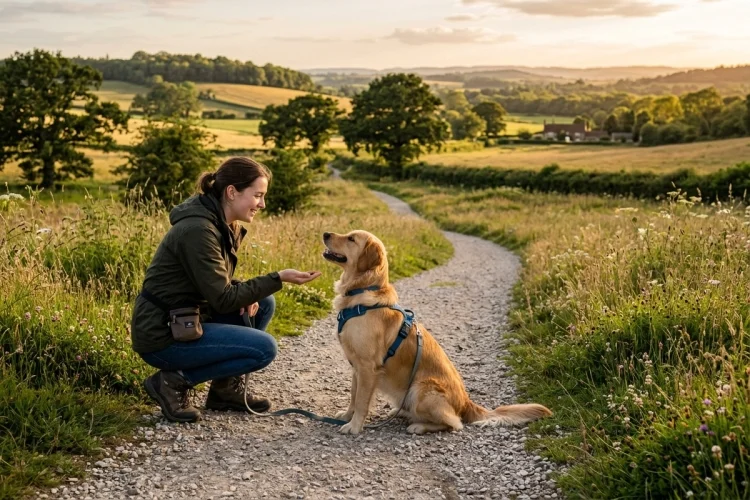
Training a dog can look effortless when you watch an experienced handler. They say “sit,” the dog sits, and everyone moves on with their day. At home, however, your dog may stare at the treat, jump on your clothes, or wander off halfway through the lesson.
The good news is that effective training does not require a commanding voice or complicated equipment. It depends mainly on clear communication, good timing, suitable rewards, and consistent practice.
This beginner’s guide explains how to train a dog using positive, reward-based methods. You will learn how to teach basic commands, improve recall, reduce lead pulling, support toilet training, and handle common mistakes without frightening or confusing your pet.
Dogs learn at different speeds, so progress may not always be smooth. A skill that works perfectly in the kitchen may disappear in a busy park.
Stay patient, keep sessions enjoyable, and remember that training is not simply about obedience – it is also a way to build trust and help your dog understand everyday life.
Understand How Reward-Based Dog Training Works
Dogs repeat behaviours that lead to good outcomes. When your dog sits and immediately receives food, praise, play, or access to something enjoyable, sitting becomes more likely to happen again.
This process is often called positive reinforcement or reward-based training. The RSPCA, Dogs Trust, PDSA, and Blue Cross all recommend teaching dogs through rewards rather than fear, pain, shouting, or physical punishment.
A reward does not always have to be food. Some dogs work enthusiastically for a favourite toy, a short game, verbal praise, or permission to sniff an interesting area.
However, the reward must matter to your dog. Dry kibble may work in a quiet living room, while roast chicken or a favourite tug toy may be needed in a more distracting environment.
Timing is also important. Reward the behaviour within a second or two so your dog understands exactly what earned the prize.
Set Up Short and Successful Training Sessions
Begin in a quiet area with very few distractions. A busy park is not the best place to teach a completely new skill because smells, dogs, cyclists, and people may be far more interesting than you.
Keep early sessions short. Several two-to-five-minute lessons spread throughout the day are usually more manageable than one long session that leaves both of you frustrated.
Prepare small treats before starting, and finish while your dog is still engaged. Dogs Trust recommends using positive reinforcement, keeping training enjoyable, and making sure your dog is comfortable before beginning.
Use one clear word for each behaviour. If one family member says “down,” another says “lie,” and someone else says “floor,” your dog may struggle to understand what is expected.
It can also help to use a marker word such as “yes.” Say it at the exact moment your dog performs the correct behaviour, then give the reward. A clicker can serve the same purpose, but each click should initially be followed by something rewarding.
Teach Your Dog Their Name and Basic Commands
1. Responding to Their Name
Say your dog’s name once in a cheerful voice. The moment they look toward you, mark the behaviour and reward them.
Avoid repeatedly saying the name when the dog is ignoring you. Instead, move to a quieter space or use a better reward.
Your dog’s name should predict something positive, not always the end of play, a bath, or being told off.
2. Teaching “Sit”
Hold a treat close to your dog’s nose and slowly move it upward and slightly backward. As the head follows the food, the bottom will often lower naturally.
The moment your dog sits, say “yes” and give the treat. After several successful repetitions, begin saying “sit” just before making the hand movement.
Do not push the dog’s back end to the floor. Luring the movement and rewarding the result is clearer and more comfortable.
3. Teaching “Down” and “Stay”
To teach “down,” move a treat from your dog’s nose toward the floor and then slowly away from them. Reward as soon as the elbows reach the ground.
For “stay,” begin with only one second. Ask your dog to sit, pause briefly, reward them before they move, and then give a release word such as “okay.” Gradually increase time and distance rather than making the exercise difficult too quickly.
Make Recall Training a Priority
A reliable recall is one of the most useful safety skills a dog can learn. Start inside the house or in a securely enclosed garden where success is likely.
Say your dog’s name, use a consistent cue such as “come,” and move backward a few steps. When the dog reaches you, reward generously with treats, praise, or a game.
Dogs Trust recommends rewarding your dog every time they return, especially during the learning stage. Recall should lead to something enjoyable rather than punishment.
Never tell your dog off for returning slowly. From the dog’s perspective, punishment happens when they reach you, which may make them less willing to come next time.
Practise gradually around mild distractions while using a normal lead or long training line. Do not allow off-lead freedom in unsecured places until recall is dependable and the environment is safe.
Occasionally call your dog, reward them, and then let them continue playing. This prevents them from learning that “come” always means the fun is over.
Teach Loose-Lead Walking Without Pulling
Dogs often pull because pulling has worked before. When they reach a smell, person, tree, or other dog while the lead is tight, moving forward becomes the reward.
Begin in a quiet area. Reward your dog whenever they remain close and the lead is loose.
When the lead becomes tight, stop walking. Wait calmly until your dog turns back or creates slack, then continue. Dogs Trust advises teaching that a loose lead allows forward movement, while pulling makes the walk pause.
Avoid jerking the lead or dragging the dog backward. The goal is to show them which behaviour keeps the walk moving.
At first, you may cover very little distance. That is normal. Think of the session as training rather than a journey to a destination.
Choose a comfortable collar or well-fitted harness, and practise direction changes and attention games at home before attempting a crowded street.
Approach Toilet Training with Patience
Take puppies and newly adopted dogs outside regularly, particularly after waking, eating, drinking, playing, and before bedtime.
Use the same toilet area when possible. Wait quietly, then reward immediately after your dog finishes. This helps them connect toileting in the correct place with a positive outcome.
Watch for sniffing, circling, fidgeting, or suddenly leaving the room. These behaviours may mean your dog needs to go outside.
Accidents are part of the learning process. Clean them thoroughly without shouting, rubbing the dog’s nose in the mess, or using the crate as punishment.
If a previously house-trained adult dog suddenly begins having accidents, contact a veterinarian. A change in toileting behaviour may require a health assessment rather than more obedience training.
Handle Unwanted Behaviour by Teaching an Alternative
Simply telling a dog “no” does not explain what they should do instead. It is often more effective to reward an alternative behaviour.
For example, if your dog jumps on visitors, teach them that keeping four paws on the floor – or sitting – earns attention. Visitors should turn away from jumping and greet the dog when they are calm.
If your puppy chews furniture, provide safe chew toys and reward them for using those. Manage the environment by moving valuable objects rather than expecting a young dog to resist every temptation.
For stealing objects, avoid chasing your dog around the house. Offer a treat or toy in exchange and teach a “drop” or “leave” cue through reward-based practice. Dogs Trust recommends making releasing an object worthwhile rather than forcing it from the dog’s mouth.
Management and training work together. Baby gates, leads, pens, closed doors, and organised storage can prevent unwanted behaviour while better habits are developing.
Practise Skills in Different Places
Dogs do not always understand that a command means the same thing everywhere. “Sit” in the kitchen may feel completely different from “sit” beside a football pitch.
Once a skill is reliable in a quiet room, practise it in the garden, near the front door, on a calm pavement, and eventually around greater distractions. Increase difficulty gradually.
Change only one challenge at a time. Do not suddenly ask for a long stay, from a large distance, in a crowded park.
Reduce your expectations when entering a new environment and use better rewards. Your dog is not necessarily being stubborn – they may simply be too distracted or have not yet learned the skill in that setting.
Mental exercise from training can also be enriching and tiring. Dogs Trust notes that learning tricks and life skills can support confidence, provide stimulation, and strengthen the relationship between dog and owner.
Avoid Common Beginner Training Mistakes
One common mistake is repeating a command many times. Saying “sit, sit, sit” may teach your dog that the first two cues can be ignored.
Another mistake is progressing too quickly. If your dog succeeds only once out of ten attempts, make the exercise easier by reducing distance, duration, or distractions.
Be consistent about household rules. Allowing sofa access one day and becoming angry about it the next creates confusion.
Avoid punishment-based tools and methods that cause pain, fear, or distress. The RSPCA advises avoiding trainers who use shouting, hitting, choke chains, or other aversive techniques and recommends reward-based instruction instead.
Finally, do not compare your dog with another animal. Age, breed tendencies, previous experiences, health, confidence, and motivation can all influence progress.
When to Get Professional Training Help
A good group class can help you practise around controlled distractions and improve your technique. Look for a trainer who uses food, toys, praise, and other rewards.
Observe a class before joining when possible. Dogs should appear comfortable and interested rather than frightened, shut down, or repeatedly forced into position.
Seek individual support when your dog shows serious fear, guarding, aggression, panic when left alone, or behaviour that creates a safety risk. Start by speaking with your veterinarian, who can rule out medical causes and direct you to a suitably qualified behaviour professional.
Training plans should be adapted to the individual dog. A method that works for an energetic puppy may not suit an anxious rescue dog or an older animal experiencing discomfort.
Learning how to train a dog begins with clear communication, realistic expectations, and rewards your pet genuinely values. Start in a quiet environment, keep sessions short, and focus on useful skills such as name response, sit, stay, recall, toilet training, and loose-lead walking.
Progress will not always happen in a straight line. Make exercises easier when your dog struggles, practise in different places, and reward the behaviour you want repeated. Avoid fear-based methods, as training should help your dog feel safe and confident.
Choose one simple skill today and practise it for just a few minutes. Consistent, positive lessons will gradually create better habits, safer outings, and a stronger relationship between you and your dog.