


Planning a holiday is much easier when your four-legged companion can join the adventure. Instead of worrying about kennels or pet sitters, you can spend your break exploring coastal paths, mountain trails, quiet villages, and open countryside together.
Fortunately, the UK offers plenty of places where dogs are more than an afterthought. Many destinations have pet-friendly cottages, welcoming pubs, scenic walking routes, spacious beaches, and outdoor attractions where well-behaved dogs can come along.
The best dog-friendly destinations in the UK range from the dramatic mountains of the Lake District to the sandy coastline of Cornwall.
However, choosing the right location involves more than finding a hotel that accepts pets. You should also consider seasonal beach restrictions, livestock, wildlife, trail difficulty, and your dog’s fitness.
Whether your companion loves energetic hikes or gentle seaside strolls, the following destinations provide excellent options for a memorable dog-friendly holiday.
1. The Lake District, Cumbria
The Lake District is an obvious choice for dogs and owners who enjoy long walks. Its lakes, woodland paths, valleys, and mountain routes provide everything from gentle waterside strolls to demanding all-day hikes.
A popular option is the Ullswater Way, a 20-mile route around Ullswater. You do not need to complete the full circuit; shorter sections allow you to create a walk that suits your dog’s age and stamina.
National Trust locations throughout the region also provide dog-friendly outdoor spaces and walking routes.
Ambleside, Keswick, and Windermere make practical bases because they offer access to walking trails, accommodation, cafés, and traditional pubs. Many businesses welcome dogs, although individual rules should always be checked before arrival.
Remember that much of the landscape is working farmland. Dogs should be kept on leads near livestock, while extra control is important during lambing and ground-nesting bird seasons.
2. Cornwall
Cornwall combines dramatic cliffs, fishing villages, countryside walks, and some of Britain’s most beautiful beaches. It is ideal for dogs that enjoy running across sand, paddling in shallow water, and investigating endless coastal smells.
Several Cornish beaches welcome dogs throughout the year. Harlyn Bay near Padstow is one example, while Watergate Bay offers around two miles of sand at low tide and allows dogs year-round.
Cornwall also has dog-friendly gardens and walking routes, including sections of the South West Coast Path.
Padstow, Falmouth, St Ives, and Newquay all offer convenient bases, but summer can be crowded. Spring and autumn often provide a more relaxed experience, cooler walking weather, and fewer people on popular paths.
Some beaches apply seasonal or daytime dog restrictions, particularly during July and August. Check the latest signs and council information instead of assuming that every beach has the same policy.
3. Eryri (Snowdonia), North Wales
Eryri is perfect for active dogs and owners who enjoy mountain scenery, forests, lakes, and traditional Welsh villages. The national park has public footpaths and open-access land where dogs can exercise, but not every piece of land is automatically open to visitors.
Betws-y-Coed is a popular base with woodland walks and easy access to nearby valleys. Beddgelert is another attractive choice, especially for gentler riverside routes.
The short walk beside the River Glaslyn and Gelert’s Grave is relatively flat, making it suitable for dogs that are not ready for a steep mountain climb.
Experienced walkers may explore more challenging routes, but mountain conditions can change quickly. Choose a trail that matches your pet’s fitness, bring enough water, and protect paws from rough or hot surfaces.
Dogs should remain under close control around sheep and wildlife. Coastal visitors should also check beach restrictions because access can change according to location and season.
4. The Cotswolds
The Cotswolds suits travellers who prefer peaceful countryside, honey-coloured villages, relaxed pub lunches, and moderate walking routes. It offers a gentler alternative to Britain’s more demanding mountain destinations.
The region has numerous footpaths through farmland, woodland, historic towns, and rolling hills. Villages such as Broadway, Winchcombe, Painswick, Tetbury, and Bourton-on-the-Water provide charming bases for exploring the surrounding countryside.
Dog-friendly attractions, accommodation, cafés, tearooms, restaurants, and country pubs are widely available. Some hotels even provide dog beds, bowls, or treats, although additional pet charges and room restrictions may apply.
Popular villages can become busy during weekends and school holidays. Quieter towns such as Winchcombe, Tetbury, and Painswick may offer a calmer experience for nervous dogs or owners hoping to avoid crowded streets.
5. The Norfolk Coast and Broads
Norfolk is a strong choice for dogs that prefer flat walks to steep hills. Its coastline features wide beaches, dunes, salt marshes, woodland, and long stretches of open landscape.
Holkham and other Norfolk beaches provide plenty of space for walking, particularly outside peak periods. Many beaches welcome responsible dog owners throughout the year, but restrictions may apply near nesting birds or during busy seasons.
Tide times should also be checked because certain coastal areas can become difficult or unsafe when water rises.
The Norfolk Broads offer a different kind of escape. This wetland landscape has a 125-mile network of navigable rivers and broads, alongside waterside paths, nature reserves, and pet-friendly accommodation.
Keep dogs controlled near wildlife and water. Reeds, grazing animals, nesting birds, and steep riverbanks can create risks even when the route appears calm.
6. Northumberland
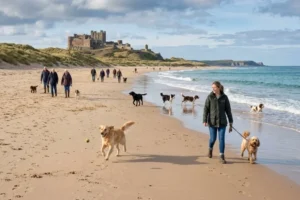
Northumberland is one of the best dog-friendly destinations in the UK for travellers seeking beaches without the heavy crowds found in some southern resorts. The region combines open coastline, castles, woodland, rural villages, and spacious walking routes.
Dogs are allowed on most Northumberland beaches throughout the year. Bamburgh, Druridge Bay, Beadnell, and Embleton Bay are popular areas for long coastal walks, although local signs and wildlife guidance must still be followed.
The county also has dog-friendly accommodation, pubs, attractions, and countryside destinations. This makes it easy to plan a complete holiday without leaving your companion behind every time you visit somewhere new.
Beach walks can be windy and exposed, so bring fresh water and a towel. Salt water should not be treated as drinking water, and dogs should be rinsed after swimming if sand and salt remain in the coat.
7. The Peak District
Located close to several major cities, the Peak District is a convenient destination for a weekend break. It offers moorland, limestone valleys, reservoirs, villages, and former railway trails suitable for different fitness levels.
Dogs are welcomed in most countryside areas, including popular National Park Authority locations and its all-user trail network. Routes such as the Monsal, Tissington, High Peak, and Manifold trails can be easier to manage than steep or rocky hill walks.
The park asks visitors to keep dogs on short leads, particularly around wildlife and farm animals. Between 1 March and 31 July, dogs must be on leads of no more than two metres on open-access land, while they should always remain controlled near livestock.
Bakewell, Castleton, and Buxton provide useful bases with access to walks, accommodation, cafés, and local attractions. Check each business’s pet policy before booking, as “dog-friendly” may only apply to selected rooms or outdoor dining areas.
How to Plan a Dog-Friendly UK Holiday
Start by choosing a destination that matches your dog’s personality and physical ability. A young, energetic dog may enjoy mountain trails, while an older companion may be happier with flat coastal paths and shorter village walks.
Confirm the accommodation’s complete pet policy before paying. Check how many dogs are permitted, whether there is an extra charge, where pets can sleep, and whether the garden is securely enclosed.
Pack a lead, harness, waste bags, food, water, bowls, towels, bedding, medication, and basic first-aid supplies. Save the details of a nearby veterinary clinic in case your dog becomes ill or injured.
Most importantly, check local rules shortly before travelling. Beach access, wildlife protections, weather warnings, and countryside restrictions can change according to the season.
The best dog-friendly destinations in the UK offer much more than accommodation that simply accepts pets.
The Lake District and Eryri provide mountain adventures, Cornwall and Northumberland deliver unforgettable coastal walks, while the Cotswolds, Norfolk, and Peak District offer gentler countryside escapes.
The right choice depends on your dog’s energy, confidence, health, and tolerance for crowds. Wherever you travel, follow local signs, protect wildlife, control your pet near livestock, and check seasonal restrictions before setting out.
Choose one destination that fits your companion’s needs, reserve genuinely pet-friendly accommodation, and begin planning your route. With a little preparation, your next UK holiday can become an adventure that both you and your dog will enjoy.


Leave a Comment