

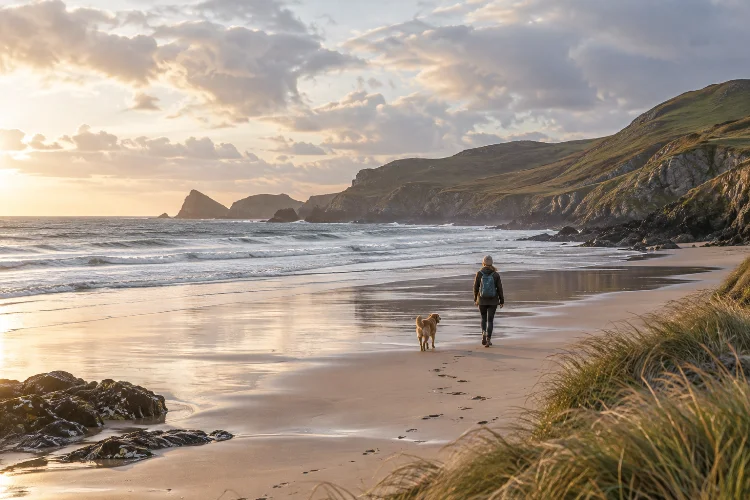
Few things make a beach walk better than having your dog racing happily across the sand beside you.
Fortunately, Wales is an excellent place for exactly that kind of adventure, with hundreds of miles of dramatic coastline, broad sandy bays, dunes, rocky coves, and sections of the Wales Coast Path waiting to be explored.
Finding the best dog-friendly beaches in Wales does require a little planning, though. Some Welsh beaches allow dogs throughout the year, while others introduce seasonal exclusion zones during spring and summer.
Visit Wales specifically recommends checking current local authority rules before travelling because restrictions can change.
The beaches below are particularly appealing because current official tourism or national park information identifies them as welcoming dogs throughout the year. They range from enormous surfing beaches to quieter nature-rich stretches of coast.
Pack water, waste bags, a lead, a towel for the car, and probably more treats than your dog technically needs. Then start exploring.
1. Rhossili Bay, Gower
Rhossili Bay is the obvious place to begin. This spectacular Gower beach offers roughly three miles of sand, towering cliffs, Atlantic views, and enough space for even energetic dogs to properly stretch their legs.
Dogs are currently welcome throughout the year. Visit Wales also highlights the bay as one of the country’s standout dog-friendly destinations, while the beach connects naturally with coastal walking routes around the Gower Peninsula.
Low tide creates an enormous sandy playground, but owners should pay close attention to tide times and coastal conditions. The nearby landscape includes cliffs and wildlife, so reliable control is important even when the beach itself feels wide open.
Access is another consideration. The route from Rhossili village to the sand is steep, and Visit Wales warns that it may not suit visitors with mobility difficulties.
For scenery, space, and a genuinely memorable Welsh coastal walk, Rhossili is difficult to beat.
2. Three Cliffs Bay, Gower
Three Cliffs Bay offers a wilder experience than a conventional seaside resort.
The beach is surrounded by dunes and dramatic limestone formations, with a stream cutting across the sand. Dogs are welcomed throughout the year, making it another strong Gower option for visitors travelling outside the traditional summer season.
Part of its charm is that reaching the beach involves a walk. That also means you should pack what your dog needs rather than expecting shops and facilities directly beside the sand.
Strong currents and tides are an important consideration here. Visit Wales advises caution with swimming, so this is better thought of as a walking and exploring beach than somewhere to automatically encourage your dog into deep water.
At low tide, the landscape opens dramatically, creating plenty of space for sniffing and exploring.
3. Barafundle Bay, Pembrokeshire
Barafundle Bay has the kind of golden sand and clear water that can make Pembrokeshire look considerably more tropical than the weather forecast suggests.
The Pembrokeshire Coast National Park Authority confirms that dogs are allowed throughout the year. Owners are expected to clean up after their pets, as elsewhere on the coast.
The adventure starts before you reach the beach. Barafundle can only be accessed by walking around half a mile from Stackpole Quay, including sections with steep steps.
That makes it particularly attractive to people looking for a beach visit combined with a proper dog walk. It is less convenient for anyone carrying huge amounts of beach equipment, though.
There are no extensive facilities directly on this secluded bay, so bring drinking water for your dog and take rubbish away with you.
4. Freshwater West, Pembrokeshire
If your dog enjoys huge open beaches rather than busy promenades, Freshwater West deserves a place on your list.
This exposed Pembrokeshire beach has wide stretches of sand, dunes, rocky sections, and powerful Atlantic surf.
Visit Wales identifies it as dog-friendly, while Pembrokeshire’s official beach information does not list it among beaches with seasonal dog exclusions.
Freshwater West is famous with experienced surfers, but that same surf deserves respect. Strong rip currents occur here, so do not assume that a dog that loves water should automatically be encouraged into the waves.
The dunes are environmentally sensitive too. Keeping your dog under good control protects wildlife and the fragile coastal enviroment.
Film fans may recognise the area from Harry Potter and the Deathly Hallows, adding an extra reason to visit even if your dog remains completely unimpressed by cinema history.
5. Broad Haven South, Pembrokeshire
Broad Haven South combines golden sand with one of Pembrokeshire’s most recognisable coastal landscapes.
Dogs are allowed year-round according to the Pembrokeshire Coast National Park Authority. The beach can be reached from the Broad Haven South car park by a steep path, while another approach runs from Bosherston through the famous Lily Ponds.
That second option turns a normal beach visit into a longer walking day.
Dogs should be kept under close control around wildlife, livestock, and sensitive natural areas. If your dog has a strong chase instinct, a lead or long line may be the responsibile choice away from the open beach.
Like much of Pembrokeshire, the surrounding coast is rugged. Strong footwear for the human half of the partnership is just as useful as water and treats for the canine half.
6. Ynyslas Beach, Ceredigion
Ynyslas is a brilliant choice when you want space rather than seaside amusements.
Located near Borth, it offers a broad sweep of sand beside the Dyfi National Nature Reserve. While Borth’s main town beach has seasonal dog restrictions, Visit Wales states that neighbouring Ynyslas welcomes dogs throughout the year.
The reserve adds dunes, salt marshes, and important wildlife habitat to the experience.
That means dog-friendly does not always mean lead-free. During sensitive periods, particularly when birds are breeding, dogs should be kept on leads in certain areas of the reserve.
There is another practical detail worth knowing: the beach car park can flood around very high tides.
Checking tide information before travelling is therefore useful for both beach safety and avoiding an unexpectedly aquatic car park.
7. Talacre Beach, North Wales
For dog owners exploring North Wales, Talacre offers something slightly different.
This enormous beach near the Dee Estuary is known for its striking Point of Ayr Lighthouse, extensive dunes, and nature-rich surroundings. Visit Wales currently states that there are no dog restrictions on the beach.
The dunes form part of an environmentally important landscape supporting wildlife including birds and rare species. Dogs should therefore remain on leads around nesting birds and sensitive habitats.
Talacre is particularly good if you enjoy walking rather than simply sitting beside the sea. A roughly three-mile Wales Coast Path circular route explores the beach and Talacre Warren.
Facilities including toilets, parking, and cafés are available nearby, making it more convenient than some of Wales’s remote coves.
Know the Seasonal Dog Restrictions Before You Travel
Not every beautiful Welsh beach welcomes dogs everywhere throughout summer.
For example, Pembrokeshire currently applies complete seasonal bans at Tenby North Beach and Whitesands, while several other beaches have partial restrictions between 1 May and the end of September.
Anglesey also restricts dogs in specified sections of seven beaches—including Benllech, Cemaes Bay, Llanddwyn and Trearddur Bay – from 1 May through 30 September. Dog-friendly areas remain available at those beaches.
North Wales has similar arrangements elsewhere. At Barmouth, for example, part of the beach excludes dogs between 1 April and 30 September while another substantial section remains dog-friendly throughout the year.
Rules can be updated, so always check the relevant council or official destination website shortly before your trip rather than relying on an old blog post.
Keep Your Dog Safe on Welsh Beaches
A beautiful beach can still contain hazards.
Check tide times before starting a long coastal walk. Rising tides can cut off routes surprisingly quickly around cliffs, coves, and estuaries.
The Pembrokeshire Coast National Park advises walkers to keep dogs under close control and warns against shortcuts across beaches where tides can block the return route.
Bring fresh drinking water instead of allowing your dog to rely on seawater. Drinking excessive salt water can make dogs ill.
Watch for cliffs, livestock, seals, nesting birds, fishing equipment, and strong surf. A confident swimmer in a lake may struggle in powerful coastal currents.
During warmer weather, also remember that a full afternoon running across sand can be physically demanding. Provide rest and shade, particularly for older dogs, puppies, and breeds that struggle with heat.
And, naturally, carry waste bags and clean up every time.
Choosing the Right Welsh Beach for Your Dog
The “best” beach depends partly on your dog.
For a high-energy dog that loves enormous open spaces, Rhossili or Freshwater West can be fantastic. If you prefer a scenic walk ending at a quieter bay, Barafundle is hard to overlook.
Three Cliffs Bay suits adventurous walkers, while Ynyslas appeals to people who enjoy wildlife and natural landscapes.
Broad Haven South combines beach time with excellent surrounding walks, and Talacre provides a convenient North Wales option with an iconic lighthouse backdrop.
Think about your dog’s recall, fitness, confidence around waves, and ability to remain calm around wildlife.
Sometimes a long lead and quieter stretch of sand produces a much better day than an overcrowded beach where everyone is constantly calling their dog back.
The best dog-friendly beaches in Wales offer far more than somewhere to throw a ball.
Rhossili, Three Cliffs Bay, Barafundle, Freshwater West, Broad Haven South, Ynyslas, and Talacre combine spectacular scenery with space for coastal adventures, and current official information welcomes dogs throughout the year at these locations.
Still, responsible planning matters. Check tides and weather, respect wildlife, carry water and waste bags, and verify local dog restrictions before travelling because rules can change occassionally.
Choose a beach that matches your dog’s fitness and temperament rather than simply picking the prettiest photograph. Then pack the lead, towel, and treats and explore a new stretch of the Welsh coast together.