

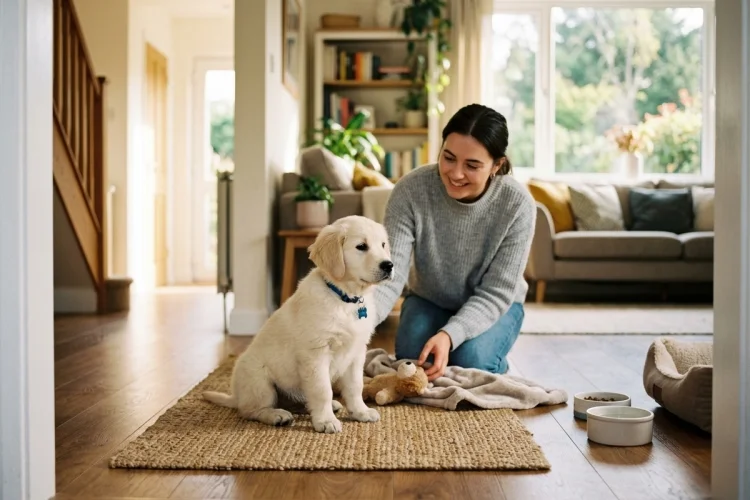
Bringing a new puppy home is one of those unforgettable life moments. You have probably bought the bed, chosen a name, filled your phone with photos, and imagined years of walks and cuddles.
Then the front door closes, your puppy looks around nervously, and you suddenly wonder what you are supposed to do next. The first two days are not about teaching perfect manners or introducing your puppy to everyone you know.
They are about helping a young dog feel safe after leaving its mother, littermates, breeder, or rescue environment. Everything in your home – its smells, sounds, people, rooms, and routines – is completely new.
When bringing a new puppy home, keeping the first 48 hours quiet and predictable can make the adjustment easier. You will begin toilet training, establish feeding and sleeping routines, introduce household members, and watch for possible health problems.
There may be accidents, crying, chewing, and interrupted sleep, but that does not mean anything is going wrong. Your puppy is simply learning how life works in a brand-new home.
Prepare the House Before Your Puppy Arrives
The easiest first day begins before your puppy walks through the door. Choose one calm area where your new pet can eat, sleep, and relax without being surrounded by noise or constant activity.
Puppy-proof this space by moving electrical cables, cleaning products, medicines, shoes, small objects, houseplants, and anything else that could be chewed or swallowed.
Remember that puppies investigate with their mouths, so an object that seems boring to you may look like an excellent toy to them.
Prepare a comfortable bed or crate, food and water bowls, puppy food, safe chew toys, a collar or harness, an identification tag, waste bags, and cleaning products suitable for pet accidents.
PDSA recommends keeping the arrival day calm because unfamiliar places can quickly become overwhelming for a young puppy.
A blanket carrying the scent of the puppy’s previous home can also provide reassurance. Both Blue Cross and the RSPCA recommend bringing home something familiar for the puppy to sleep beside during the first few nights.
Keep the Journey Home Calm and Safe
Your puppy’s first journey may be exciting for you but frightening for them. Use a secure travel crate or an appropriate car restraint rather than allowing the puppy to move freely around the vehicle.
Bring towels in case of sickness or toilet accidents, and avoid turning the collection trip into a long family outing. Travel directly home when possible and speak quietly if the puppy appears worried.
Once you arrive, take the puppy straight to the chosen toilet area before exploring the house. This is particularly important after a long journey and immediately introduces the place where you want them to relieve themselves.
PDSA recommends making the toilet area the puppy’s first stop on arrival.
Do not worry if the puppy seems hesitant, sleepy, or uninterested in playing. Some puppies confidently investigate everything, while others need time to observe from a safe distance.
Introduce the Home One Small Area at a Time
It may be tempting to give your puppy a grand tour, but access to the entire house can be overwhelming and make toilet training more difficult. Begin with one or two puppy-proofed rooms and gradually expand their space.
Let your puppy sniff and explore at their own pace. Avoid passing them from person to person, surrounding them with excited children, or inviting a large group of visitors on the first day.
Family members should sit quietly and allow the puppy to approach. Children need supervision and should understand that the puppy must not be chased, squeezed, disturbed while eating, or woken from sleep.
If you already have another dog, manage the introduction carefully. Blue Cross recommends removing food and toys before the first meeting to reduce potential conflict and ensuring that the resident dog is properly vaccinated.
Meetings should be calm, supervised, and followed by time apart so both animals can rest.
Start a Simple Feeding Routine
Continue feeding the same food the puppy received from the breeder or rescue organisation. A sudden change in diet, combined with the stress of moving, can contribute to digestive upset.
Ask for written information about the food brand, portion size, and normal mealtimes. If you eventually want to switch foods, introduce the replacement gradually by mixing increasing amounts into the original diet over several days.
Young puppies generally need smaller, more frequent meals than adult dogs. Blue Cross advises feeding puppies from around eight weeks to four months old four times per day, although your veterinarian may adjust the schedule according to the puppy’s breed, size, and health.
Fresh water should always be accessible. Keep mealtimes quiet, measure portions rather than guessing, and avoid offering lots of unfamiliar treats during the first 48 hours.
A puppy may eat less than expected on the first day because of stress. However, repeated vomiting, severe diarrhoea, extreme weakness, a swollen abdomen, or refusing both food and water should be discussed promptly with a veterinarian.
Begin Toilet Training Immediately
Toilet training begins as soon as your puppy arrives, but accidents are completely normal. Young puppies have limited bladder control and do not yet understand where you expect them to go.
Take the puppy to the same toilet area after waking, eating, drinking, playing, and before bedtime. The RSPCA also recommends offering a toilet opportunity roughly every 45 minutes to one hour, depending on the puppy’s age and individual needs.
Wait quietly and reward the puppy immediately after they finish. Praise, a small treat, or a brief game helps them connect toileting in the correct place with a positive result.
Watch for signs such as sniffing the floor, circling, wandering away, or suddenly becoming restless. If you notice these signals, calmly take the puppy outside.
Never shout, punish, or rub a puppy’s nose in an accident. They will not understand the reason for the punishment and may simply learn to hide when they need to relieve themselves. Clean the area thoroughly and supervise more closely next time.
Encourage Rest and Positive Crate Training
Puppies need a surprising amount of sleep. Many sleep for approximately 15 to 20 hours across a day, although the total varies between individuals. Overtired puppies often become bitey, noisy, wild, or unable to settle rather than simply lying down.
Create a quiet sleeping space away from constant household traffic. A crate can be useful, but it should be introduced as a safe resting place rather than used for punishment.
Leave the crate door open at first and place comfortable bedding, treats, or a familiar blanket inside. The RSPCA recommends building positive associations gradually by rewarding the puppy for approaching and entering the crate.
Do not force the puppy inside and immediately leave for a long period. Short, positive sessions are more effective. A crate should be large enough for the puppy to stand, turn around, stretch, and lie down comfortably.
Survive the First Night Without Creating Panic
The first night can be difficult because your puppy may be sleeping alone for the first time. Crying does not necessarily mean the puppy is being naughty or manipulative. They may be frightened, lonely, or in need of the toilet.
Place the puppy’s bed or crate near your bed for the first few nights. Your presence can make the transition less stressful, and you will be able to hear when the puppy becomes restless.
Take them quietly to the toilet area when necessary, but keep night-time trips boring. Avoid energetic games, bright lights, or long conversations that accidentally teach the puppy that waking up leads to entertainment.
Blue Cross advises preparing carefully for the first night and recognising that puppies may feel worried for several days or weeks. Once the puppy is settling confidently, the sleeping area can be moved gradually toward its permanent location.
Keep Training Short, Positive, and Practical
Your puppy is learning from every interaction, even during the first 48 hours. However, this is not the time for long obedience sessions.
Begin with simple lessons such as responding to their name, coming toward you, accepting gentle handling, and exchanging inappropriate objects for suitable toys. Reward the behaviours you want instead of waiting to correct mistakes.
Practice touching the puppy’s paws, ears, mouth, and body for just a few seconds while offering treats. This can make future grooming and veterinary examinations less stressful.
Do not overwhelm an unvaccinated puppy with public walks or busy dog areas.
PDSA advises exercising young puppies at home until they have received the necessary vaccinations, while avoiding excessive jumping, fast turns, and other high-impact movements that may strain a developing body.
Socialisation is still important, but it should involve safe, controlled, positive experiences. Your veterinarian can explain which activities are appropriate before the vaccination course is complete.
Arrange Veterinary Care and Monitor Health
Register with a veterinary practice before or soon after bringing your puppy home. Ask when the puppy should receive their next health examination, vaccinations, parasite treatment, and any legally required identification or registration.
Bring all records supplied by the breeder or rescue centre. These may include vaccination certificates, microchip details, worming history, feeding information, insurance documents, and results from breed-specific health tests.
During the first 48 hours, observe the puppy’s appetite, drinking, stools, urination, breathing, movement, and general alertness. Mild nervousness or temporary appetite changes can occur, but significant or persistent symptoms require professional advice.
Contact a veterinarian urgently if the puppy has breathing difficulty, collapses, appears severely weak, experiences repeated vomiting, produces bloody diarrhoea, cannot urinate, has a painful swollen abdomen, or may have swallowed something dangerous.
Bringing a new puppy home is exciting, messy, tiring, and incredibly rewarding. During the first 48 hours, your main priorities are safety, calm introductions, familiar food, frequent toilet breaks, plenty of sleep, and gentle reassurance.
Do not expect perfect behaviour immediately. Your puppy has entered an unfamiliar world and needs time to understand your household, trust new people, and settle into a routine.
Keep training positive, limit overwhelming experiences, and ask a veterinarian for help whenever you are concerned about health or development.
Prepare your home before collection, create a simple daily schedule, and allow your puppy to progress at their own pace. A calm beginning will not solve every future challenge, but it can build the foundation for a confident dog and a strong lifelong bond.


Leave a Comment