

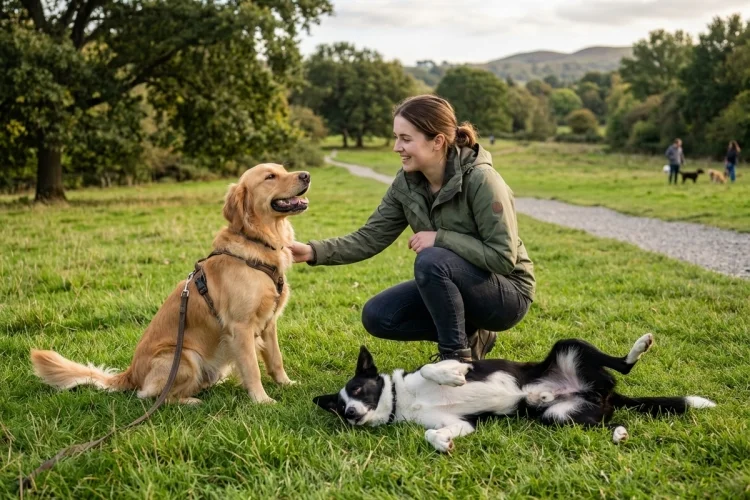
Your dog may not speak your language, but they are communicating with you almost constantly. A change in tail position, a quick lick of the lips, or a sudden stiffening of the body can reveal how your pet feels long before they bark, growl, or walk away.
Unfortunately, many canine signals are easy to misunderstand. A wagging tail is often assumed to mean happiness, while a dog rolling onto their back may automatically be seen as asking for a belly rub.
In reality, these behaviors can have several meanings depending on the situation and the rest of the dog’s posture. Understanding your dog’s body language allows you to recognize comfort, excitement, anxiety, fear, and potential conflict.
It can also make training easier, prevent stressful encounters, and help your dog feel heard. The key is not to focus on one movement. Instead, look at the dog’s entire body, consider what is happening around them, and compare their behavior with their normal relaxed state.
Why Dog Body Language Matters
Dogs communicate through posture, facial expressions, movement, scent, and vocal sounds. Body positioning is especially important because it can show a dog’s emotional state before more obvious behaviors appear.
Learning these early signals helps you respond before your dog becomes overwhelmed. For example, a dog at a crowded gathering might begin turning their head away, licking their lips, and lowering their tail.
Giving them a quiet place at that stage may prevent the situation from escalating into barking or snapping.
Reading canine communication also strengthens trust. When you respect a dog’s request for distance, they learn that they do not need to use stronger warnings to make themselves understood.
However, body language usually reflects emotion rather than guaranteeing what a dog will do next. A nervous-looking dog may retreat, freeze, bark, or approach cautiously, so every situation should be judged carefully.
Look at the Whole Dog, Not One Signal
One of the biggest mistakes owners make is interpreting a single body part in isolation. A tail wag, for instance, mainly indicates emotional arousal or engagement. It does not always mean that the dog feels friendly.
Picture two dogs wagging their tails. The first has a loose body, soft eyes, an open mouth, and wide movements that seem to wiggle their entire back end. The second stands still with a closed mouth, hard stare, raised tail, and short, stiff wag.
Although both dogs are wagging, they are communicating very different feelings. The first probably feels comfortable or excited, while the second may be highly alert, uncertain, or uncomfortable.
Always read the tail, ears, eyes, mouth, posture, movement, and surroundings together. Context turns individual signals into a complete message.
What Your Dog’s Tail Is Telling You
A relaxed dog generally carries their tail in a natural position for their breed. The movement may be broad, loose, and accompanied by relaxed muscles.
A high, rigid tail can suggest alertness or heightened arousal, particularly when paired with a forward-leaning posture. A lowered or tucked tail commonly appears when a dog feels worried, frightened, or socially uncertain.
Speed matters too. Fast wagging can indicate intense excitement, but that excitement may be friendly, anxious, or confrontational. A slow, controlled wag with a stiff body should not be treated like the soft, sweeping wag of a relaxed greeting.
Breed and anatomy must also be considered. A Greyhound naturally carries its tail differently from a Pug, while dogs with short, curled, or docked tails can be harder to read. Learn what your dog’s tail looks like when they are resting comfortably, then notice changes from that baseline.
Reading the Eyes, Ears, and Mouth
1. Eyes
Soft eyes, relaxed eyelids, and an easy gaze are usually associated with comfort. A fixed stare, enlarged pupils, or wide-open eyes can appear when a dog is intensely focused or emotionally aroused.
You may also notice “whale eye,” where the whites of the eyes become visible as the dog turns their head while continuing to watch something. This commonly signals discomfort, fear, or a desire to avoid direct interaction.
2. Ears
Ear position should be judged according to the dog’s natural ear shape. Loosely positioned ears often accompany relaxation, while ears pushed forward may indicate attention or alertness.
Ears flattened tightly against the head can be connected with fear, stress, or appeasement. They become more concerning when combined with a tucked tail, lowered body, trembling, or attempts to move away.
3. Mouth
A relaxed dog may have a slightly open mouth with loose facial muscles. A tightly closed mouth can be one of the first signs that the dog has become focused or tense.
Yawning, lip licking, drooling, and excessive panting may also indicate stress when they occur outside their usual context. A dog that yawns after waking up is probably tired, but repeated yawning during a noisy veterinary visit may have an entirely different meaning.
Relaxed and Playful Body Language
A comfortable dog usually looks soft rather than rigid. Their muscles are relaxed, their movements are natural, and their face does not appear tense.
During play, many dogs perform a play bow by lowering their front legs and chest while keeping their rear end raised. This often invites another dog or person to interact.
Bouncy movements, curved approaches, loose facial expressions, and frequent pauses are also common during healthy play.
Good play tends to involve give-and-take. Dogs may chase each other, switch roles, pause briefly, and then choose to continue. When one dog repeatedly tries to hide, escape, or remain still while the other keeps pursuing them, the interaction may no longer be enjoyable.
Owners can use short breaks to check consent. Gently call the more energetic dog away and watch the other dog. If the second dog chooses to return, the play can usually continue under supervision.
Signs of Anxiety, Fear, or Discomfort
Stress signals can be surprisingly subtle. A worried dog may turn away, lower their head, lick their lips, yawn, lift one paw, avoid eye contact, or suddenly begin sniffing the ground.
As discomfort increases, the dog may crouch, tuck their tail, pin back their ears, freeze, tremble, hide, or attempt to escape. Freezing deserves special attention because people sometimes mistake it for calmness.
In reality, a motionless, stiff dog may be communicating that they cannot comfortably handle the interaction.
Imagine a child hugging a dog that suddenly closes its mouth, turns its head, and shows the whites of its eyes. The safest response is to end the hug and give the dog space, rather than waiting to see whether it growls.
Respecting these quiet warnings reduces pressure on the animal. Punishing a growl or other warning can be risky because the dog may learn to suppress the signal without feeling any safer.
Recognizing Defensive and Aggressive Signals
Dogs experiencing conflict may try to appear smaller or larger. A fearful dog might crouch and lean backward, while a defensive dog may shift forward, raise their body, or stiffen their legs.
Warning signals can include freezing, direct staring, growling, snarling, showing teeth, raised hackles, lunging, or snapping.
Raised hackles indicate strong arousal, but they do not automatically prove that a dog is aggressive. Excitement, surprise, fear, and uncertainty can also trigger this physical response.
When you notice a tense combination of signals, do not stare at the dog, reach toward them, or force an interaction. Increase the distance calmly and avoid sudden movements.
Persistent aggression, resource guarding, or intense fear should be evaluated by a veterinarian and a qualified behavior professional. Pain, illness, past experiences, and environmental stress can all influence behavior, so simply labeling a dog as “bad” does not address the cause.
How to Become Better at Reading Your Dog
Start by observing your dog during ordinary moments. Notice their neutral tail position, natural ear carriage, resting face, and normal walking style. Knowing their baseline makes unusual changes easier to spot.
Next, consider the trigger. Ask what happened immediately before the behavior appeared. Was a stranger approaching, did another dog enter the area, or did someone reach toward the dog’s food?
You can also record short videos during training or social situations. Watching them later often reveals lip licks, head turns, pauses, and posture changes that happened too quickly to notice in real time.
Most importantly, respond to the earliest sign of discomfort. Creating distance, lowering the intensity of an exercise, or offering a quiet break teaches your dog that subtle communication works.
Understanding your dog’s body language is not about memorizing one meaning for every tail wag, ear movement, or facial expression. It is about observing the complete dog, considering the surrounding situation, and noticing changes from their normal behavior.
Soft movements generally suggest comfort, while stiffness, avoidance, freezing, and repeated stress signals indicate that your dog may need help or space. Responding early can improve training, strengthen trust, and reduce the risk of stressful encounters.
Spend a few minutes each day quietly observing your dog during walks, play, rest, and social interactions. The more carefully you watch, the easier it becomes to recognize what they are communicating – and the better you can support their emotional well-being.



Leave a Comment