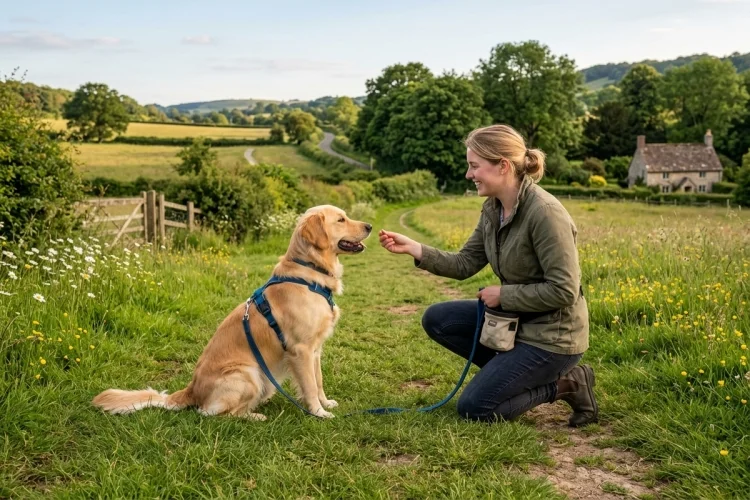
Teaching your dog to sit may seem like a basic party trick, but it is actually one of the most useful behaviours they can learn. A reliable sit can help your dog remain calm before meals, wait at the door, greet visitors politely, and pause safely near a road.
The good news is that you do not need expensive equipment or advanced training experience. All you need is a quiet space, a reward your dog enjoys, clear timing, and a little patience.
In this guide, you will learn how to teach a dog to sit using positive reinforcement. The method works for puppies, adult dogs, and many rescue dogs, although every animal will progress at a different pace.
Some dogs understand the exercise within a few minutes. Others need several short sessions before everything clicks. Rather than forcing your dog into position, focus on making the correct behaviour easy, rewarding, and enjoyable.
Why Teaching Your Dog to Sit Is So Useful
Sitting gives your dog a simple alternative to behaviours such as jumping, pulling forward, or rushing through an open door. Instead of repeatedly telling your pet what not to do, you can ask for a clear action they already understand.
For example, asking your dog to sit before greeting someone can reduce excited jumping. A sit at the kerb can also create a useful pause before crossing the road, while sitting before dinner encourages calmer mealtime behaviour.
The command also creates a foundation for more advanced exercises. Once your dog understands sit, you can begin teaching stay, wait, lie down, polite greetings, and calm lead walking.
Dogs Trust and the RSPCA both describe sit as a practical behaviour for everyday safety and manners, including meeting people and waiting before crossing roads.
Prepare for a Successful Training Session
Begin somewhere quiet, such as your living room or a calm part of the garden. Turn off the television, move toys out of reach, and avoid training when several people are walking around.
Prepare several small treats that your dog can eat quickly. Large biscuits interrupt the lesson because your dog may spend longer chewing than learning.
The reward does not have to be food. Some dogs are more motivated by a toy, praise, or a short game. However, food is often useful when introducing sit because it can guide the dog’s head into the correct position.
Keep each lesson brief. A few minutes of successful practice is more valuable than a long session that leaves your dog distracted or frustrated. PDSA recommends short sessions, immediate rewards, clear commands, and training one behaviour at a time.
How to Teach a Dog to Sit in Six Steps
Step 1: Start With Your Dog Standing
Stand or kneel in front of your dog while they are on a non-slip surface. Avoid beginning when they are already sitting, as they need to experience the movement from standing into the new position.
Show your dog that you have a treat, but do not give it to them yet. Hold it close enough for them to notice without allowing them to grab it.
If your dog becomes overexcited, wait quietly until all four paws are on the floor. You can also use a less exciting reward if they are unable to focus.
Step 2: Place the Treat Near Their Nose
Hold the treat just above your dog’s nose. Keeping it reasonably close encourages them to follow it with their head rather than jumping toward your hand.
Move slowly and watch your dog’s body language. If the treat is held too high, your dog may jump. If it moves too quickly, they may step backward or lose interest.
Your goal is not to push the dog into position. The treat acts as a guide, allowing the dog to perform the movement naturally.
Step 3: Move the Treat Back Over the Head
Slowly move your hand upward and slightly toward the back of your dog’s head. As their nose follows the treat, their head should lift and their bottom will often move toward the floor.
The instant their bottom touches the ground, use a marker word such as “yes” and give the reward. A clicker can be used instead of a verbal marker.
The marker helps identify the exact behaviour that earned the treat. Dogs Trust, Blue Cross, and the RSPCA recommend moving the lure over the dog’s head and rewarding as soon as the sitting position is achieved.
Step 4: Repeat Without Saying “Sit” Yet
Repeat the hand movement several times until your dog follows it consistently. At this stage, focus on teaching the action rather than introducing the verbal cue.
Saying “sit” before your dog understands the movement can weaken the command. They may hear the word while jumping, backing away, or staring at the treat and become unsure what it means.
Practise three to five successful repetitions, then take a break. Ending after a good attempt keeps the experience positive.
Step 5: Add the Verbal Cue
Once your dog reliably follows the hand signal, say “sit” just before making the familiar movement. Pause briefly after saying the word, then guide them with your hand.
Mark and reward when their bottom reaches the floor. With repetition, your dog will begin connecting the word with the action.
Use one cue consistently. Avoid alternating between “sit,” “sit down,” and “sit properly,” as the extra words may be confusing—especially when you later teach “down” as a separate behaviour. Dogs Trust recommends introducing the verbal cue only after the dog understands the hand movement.
Step 6: Add a Release Word
Your dog also needs to know when sitting has finished. After rewarding them, use a release word such as “okay,” “free,” or “all done,” then encourage them to move.
Without a release cue, some dogs may decide for themselves when to stand. This becomes inconvenient when you later turn sit into a short stay.
Keep the release word consistent across the household. The RSPCA recommends using an “okay” cue to make the end of the exercise clear.
How to Stop Relying on a Treat Lure
Once your dog follows the hand movement consistently, practise making the same gesture with an empty hand. Mark the sit and deliver the treat from your other hand or pocket.
This prevents your dog from believing they only need to respond when food is clearly visible. The hand signal gradually becomes meaningful by itself.
You can then begin varying the rewards. Sometimes offer food, sometimes praise, and occasionally use a toy or another activity your dog enjoys.
Do not remove rewards completely as soon as your dog succeeds. Continue reinforcing good responses, especially in new or distracting places. Reward-based training works because the behaviour continues producing positive results.
Common Problems When Teaching Sit
1. Your Dog Jumps for the Treat
Your hand may be too high above their head. Lower it toward the nose and move it back more slowly.
Reward only when the bottom touches the floor. Giving the treat while your dog is jumping can accidentally reinforce jumping instead of sitting.
2. Your Dog Walks Backward
Try practising with your dog near a wall, leaving enough room for them to move comfortably but reducing the opportunity to keep reversing. A non-slip surface can also help them feel more secure.
Move the lure slowly rather than stretching your arm far behind the dog. The motion should guide the nose upward, not pull the entire body backward.
3. Your Dog Will Not Sit
Do not push down on their back or force their hind legs into position. Physical pressure can cause discomfort, confusion, or fear.
Check the surface first. Some dogs hesitate to sit on cold, wet, slippery, or uncomfortable ground.
A dog that normally sits but suddenly refuses, moves stiffly, or appears painful may need veterinary advice. Joint, back, or hip discomfort can make sitting difficult.
4. Your Dog Sits Before You Say the Cue
This usually means they are anticipating the reward. Reset the exercise by taking a small step, waiting for them to stand, and beginning again.
Sometimes reward calm standing so the dog does not assume that every visible treat automatically means sit.
Practise Sit in Real-Life Situations
A dog that sits perfectly in the kitchen may seem to forget everything outdoors. This is normal because dogs do not automatically understand that a cue applies in every environment.
Start introducing mild distractions gradually. Practise in another room, in the garden, near the front door, and on a quiet pavement before trying a busy park.
Ask for a sit before putting down the food bowl, opening a door, attaching the lead, or greeting a familiar person. This gives the command a practical purpose rather than limiting it to formal training sessions.
Use especially valuable rewards in exciting situations. Blue Cross recommends practising sit at kerbs, doorways, and before greetings while rewarding generously when the dog responds around distractions.
Should You Use a Clicker?
A clicker is optional, but it can make your timing more precise. The click marks the exact moment your dog’s bottom touches the ground, followed by a reward.
Before using one for sit, teach your dog that a click predicts something good. Click once, immediately give a treat, and repeat until your dog responds positively to the sound.
Do not use the clicker to attract attention or repeatedly click during one behaviour. One correct sit requires one click.
PDSA explains that clicker training can reduce confusion by identifying the precise moment the dog performs the desired action.
When to Ask a Professional Trainer for Help
Most dogs can learn sit at home, but professional guidance may help if your dog is extremely fearful, unable to focus, uncomfortable around food, or showing defensive behaviour.
Choose a trainer who uses rewards such as treats, play, and toys. Avoid classes relying on shouting, fear, pain, choke chains, or physical punishment.
The RSPCA recommends looking for qualified, welfare-focused professionals, including trainers registered with the Animal Behaviour and Training Council.
Learning how to teach a dog to sit is mainly about clear timing, positive reinforcement, and patient repetition. Guide the dog’s nose gently upward, mark the moment their bottom reaches the floor, and deliver the reward immediately.
Once the movement becomes reliable, add the verbal cue, remove the visible food lure, and practise in different locations. Never force your dog into position or punish mistakes, as this can make training confusing and stressful.
Start with one short session in a quiet room today. Celebrate small improvements, finish after a successful attempt, and gradually use sit during meals, walks, greetings, and doorways. With consistent practice, this simple exercise can become one of your dog’s most useful everyday skills.